Changes made to the par-4 11th and par-5 15th holes at Augusta National Golf Club in advance of the 2022 Masters Tournament can be measured in today’s numbers. Specifically, No. 11 – the second-hardest hole in Masters history – will now be 520 yards (previously 505) and the tee box shifted to the left. And No. 15 – the second-easiest hole in Tournament history – will now play 20 yards longer, at 550 yards.
But for a complete understanding of these decisions and changes, a series of yesterday’s words are also essential.
When discussing design philosophies of Augusta National, co-Founder Bobby Jones often went beyond the numbers and spoke to a philosophy about the need to test a golfer’s strategy with the tee shot. It was important, opined Jones, that there be a wide gap between a good and bad tee shot.
The gap would “reward the good shot by making the second simpler in proportion to the excellence of the first.”
Photo Gallery3
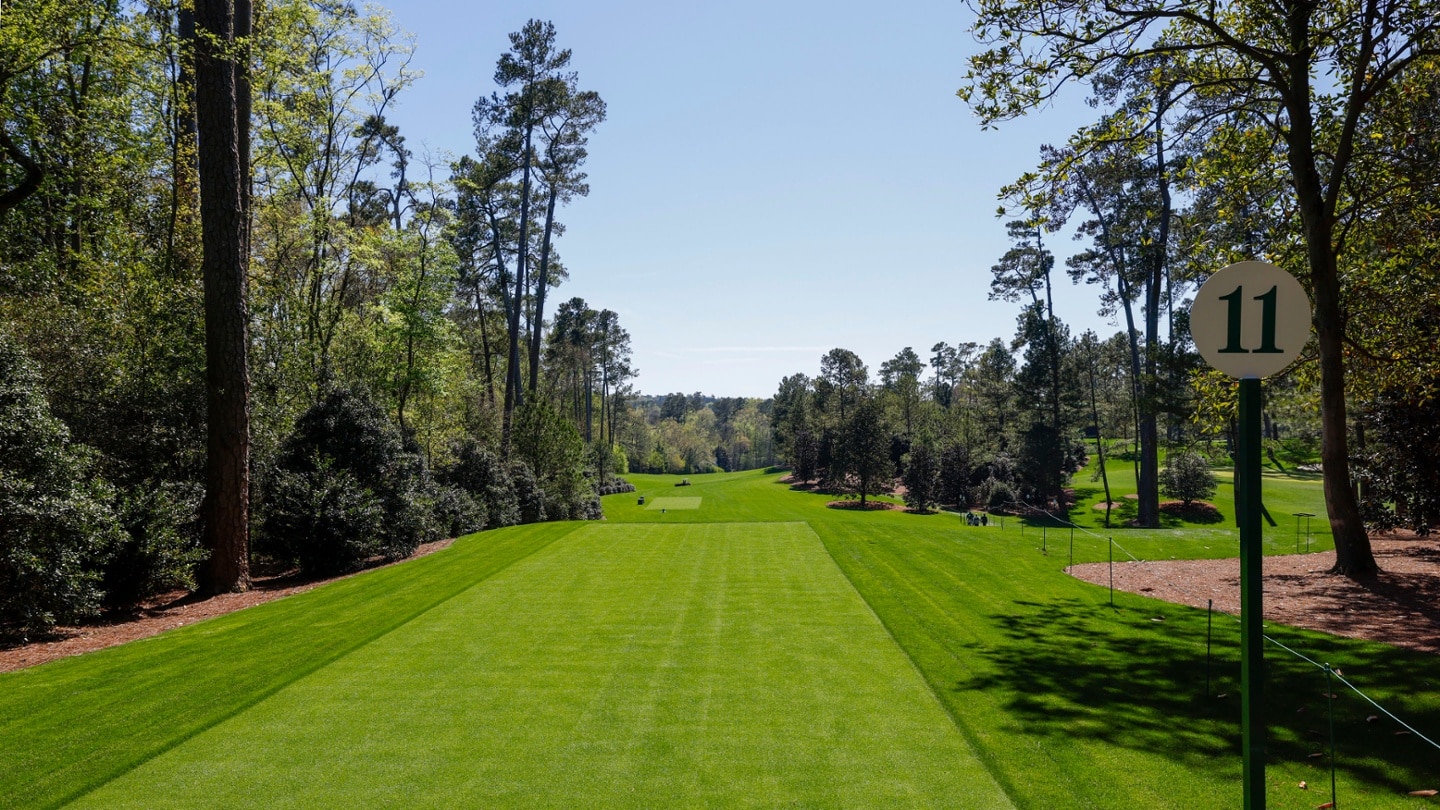
A view from No. 11 tee
Chris Trotman/Augusta National
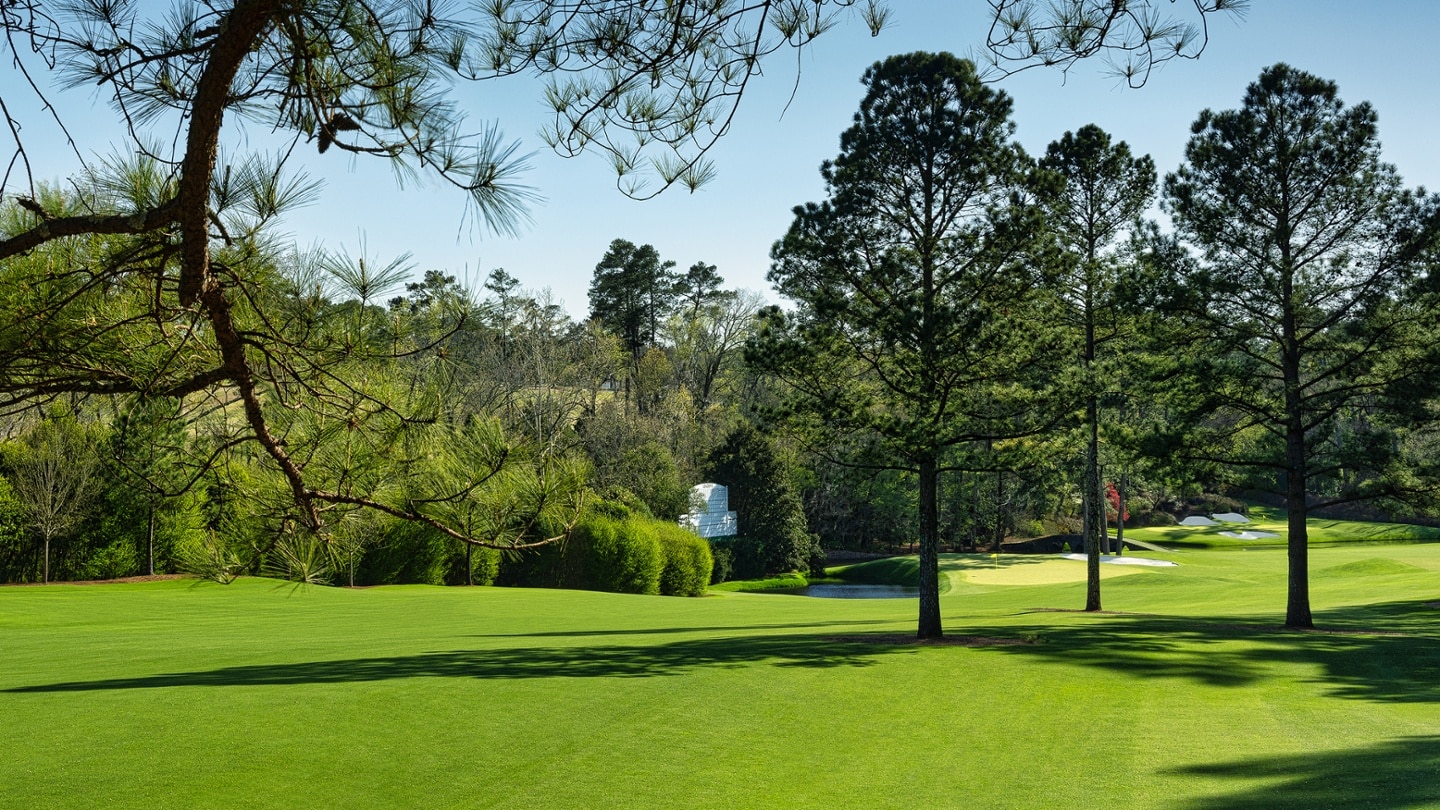
A view from of No. 11 green from the right side of the landing area
Augusta National
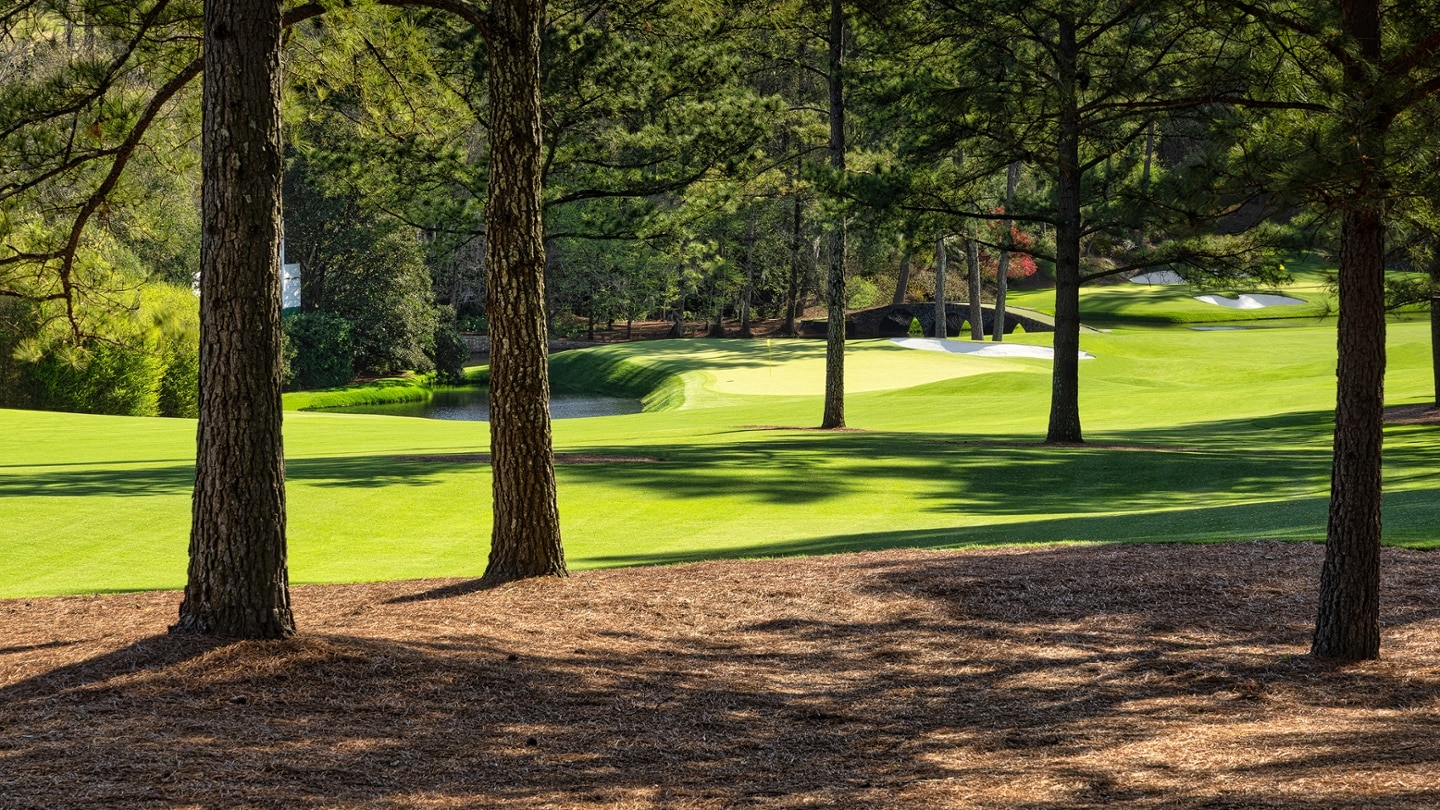
A view of No. 11 green through the rightside trees
Augusta National
At both No. 11 and No. 15, Dr. Alister MacKenzie designed holes that demonstrated how he agreed with Jones’ philosophy about proper execution of a strategic tee shot. Well-placed tee shots to the right side of each fairway would generate “a big advantage for the next shot,” said MacKenzie. But he pointed out that if you did not hit the proper shot, your second would be present a greater challenge.
In today’s world, it is referred to frequently as risk/reward. But given the distances elite players are hitting it in 2022, the sentiment is that there is more reward with less risk.
Consistent with viewpoints offered by Jones and Clifford Roberts that the course is a “work in progress,” each hole is continuously evaluated for modifications and improvements. Changes to Nos. 11 and 15 speak to that responsibility, which goes deeper than just the added yardage.
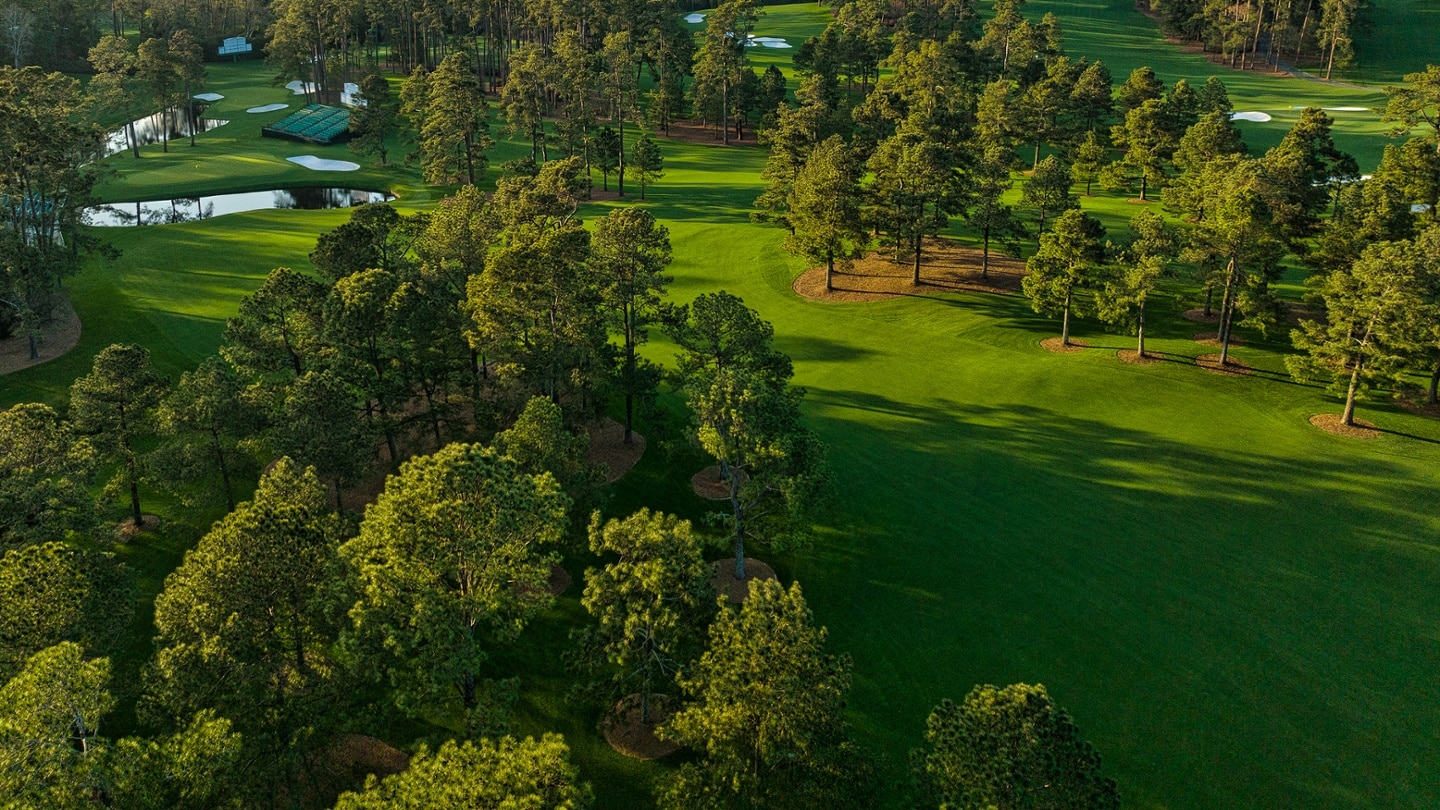
On each hole, the fairway has been “recontoured” down the right side, which would be your target should you be looking to leave yourself a simpler second shot. Properly placed tee shots into this “recontoured” area of approximately 10 to 15 yards in width will propel the ball forward and the reward will be a flatter lie, a great view of the green, and less daunting hurdles with water left of the green (at No. 11) and in front of the green (No. 15).
Photo Gallery2
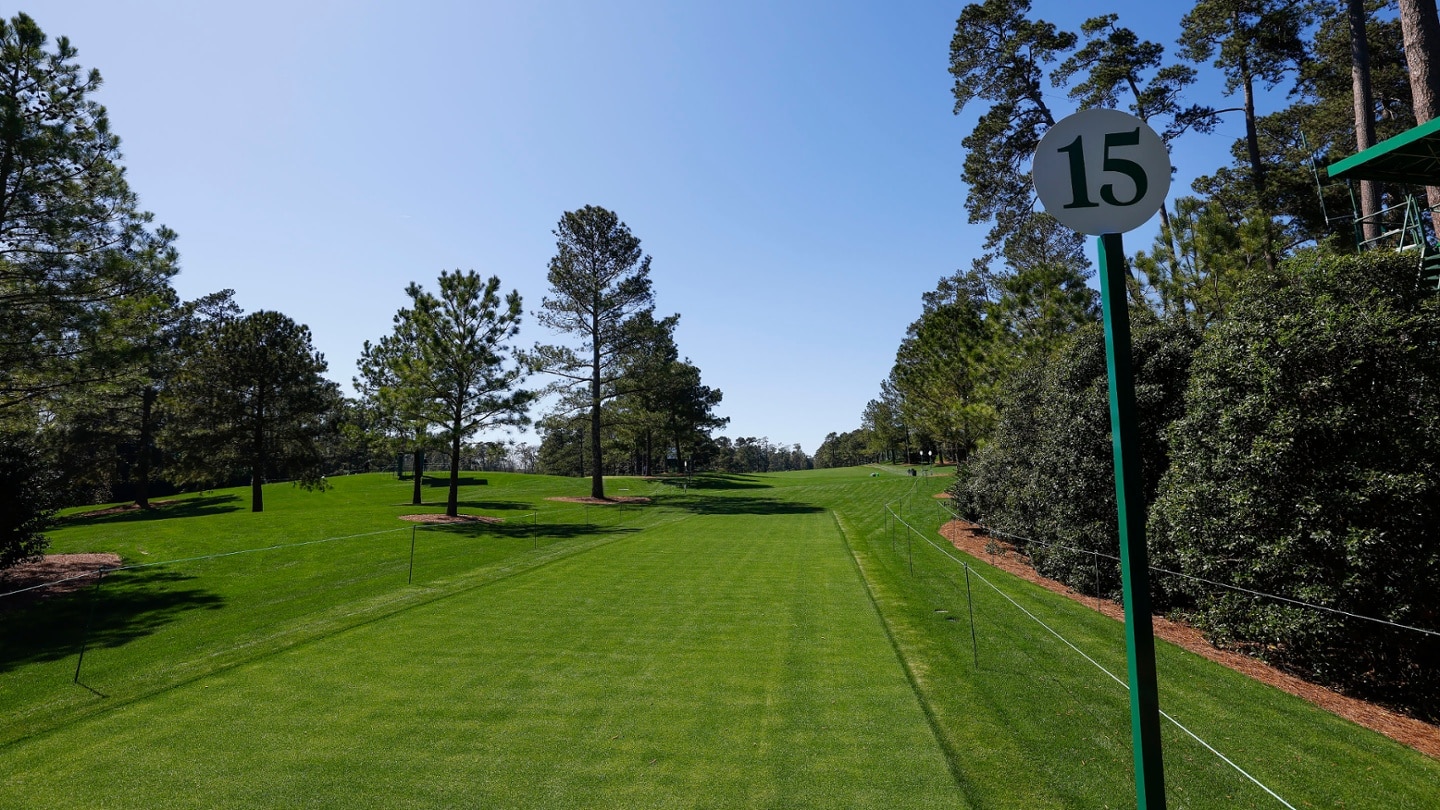
A view from No. 15 tee
Chris Trotman/Augusta National
No 15 | Firethorn | 2022
Augusta National
But with the added distance, plus the tee box shifted left at No. 11, navigating your tee shot down the right side brings more risk into play. Players who miss the left of these landing areas will likely face second shots of greater length, more difficult lies and significant angst while staring at the water.
At No. 11, trees down the right side have been lessened, though three prominent trees remain in strategic positions to alter second shots hit too far to the right. At No. 15, from a tee box now situated behind No. 10 green, misses to the left will encounter a longer approach around the tall pine trees.
In other words, the rewards Jones spoke of when explaining the gap he wanted between good and bad tee shots – “more commonly one of three: a better view of the green, an easier angle from which to attack a slope, or an open line of approach past guarding hazards” – are less likely to be achieved with the high frequency they have been in recent years.
For Augusta National, who takes seriously the task of maintaining the strategic design philosophies of Jones and MacKenzie, there is a historic context to be considered. It was a 4-wood that Gene Sarazen played into the 15th green for the iconic double-eagle in 1935 and the challenge is to see that short irons aren’t the club of choice going forward. For second shots into No. 11, Jones wrote in 1959 that it is usually played “with a 3-iron or a stronger club,” and the 6-iron from 200-plus yards that Hideki Matsuyama played into No. 11 while winning the Masters last year would indicate that updates are keeping “in step with the development of the game,” as Jones said.
Impactful as it is to study words written and said by Jones and MacKenzie decades ago about design philosophies at Augusta National, numbers can be used to show that the responsibility, in a historical context, are being followed quite well.
Take No. 11, for example. If you compare 2005, the last year it played at 490 yards, with 2021, the last year it played at 505 yards, the similarities are stunning:
| | 2005 | 2021 |
| Field Average | 4.358 | 4.399 |
| Total Birdies | 18 | 15 |
| Total Bogeys | 96 | 99 |
| Total Doubles | 10 | 10 |
| Other | 1 | 3 |
Crunch those numbers to understand the progress necessary to keep Augusta National competitively relevant as the game evolves.



 … swing lube with a shot of aiming fluid.