How Steely Dan Created ‘Deacon Blues’
Donald Fagen and Walter Becker of Steely Dan explain the 1977 hit ‘Deacon Blues’
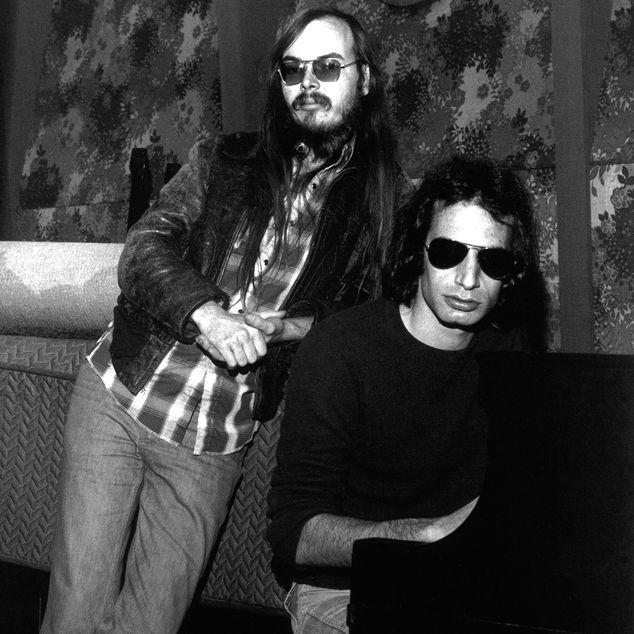
Walter Becker, left, and Donald Fagen in Los Angeles in 1975
PHOTO: ED CARAEFF/GETTY IMAGES
By Marc Myers
Updated Sept. 10, 2015 1:15 pm ET
As midlife-crisis songs go, Steely Dan’s “Deacon Blues” ranks among the most melodic and existential. Recorded for the album “Aja” in 1977, the song details the bored existence of a ground-down suburbanite and his romantic fantasy of life as a jazz saxophonist.
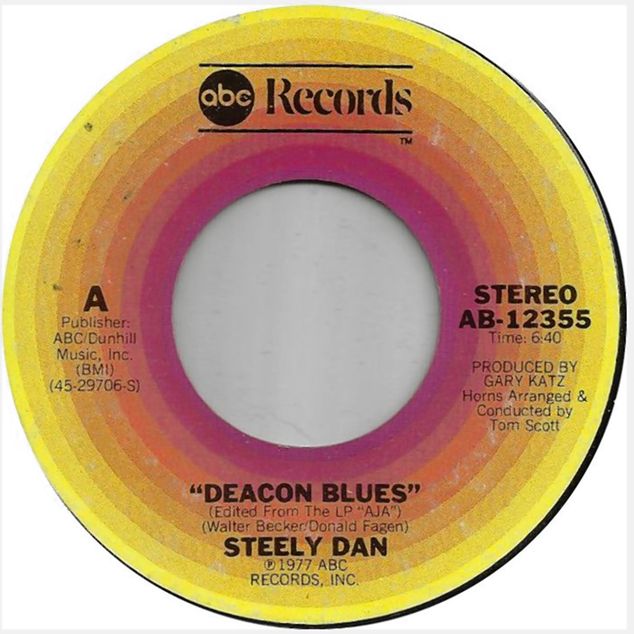
Written by Walter Becker and Donald Fagen in 1976, “Deacon Blues” was released in 1977 on Steely Dan’s album “Aja,” which in the fall reached No. 3 on Billboard’s album chart, where it remained for seven consecutive weeks. The song also was a hit single in early 1978.
With Steely Dan appearing in New York at the Beacon Theatre from Oct. 6-17, Mr. Fagen, Mr. Becker, guitarist Larry Carlton and saxophonists Tom Scott and Pete Christlieb recalled the writing, arranging and recording of the cult classic. Edited from interviews:
Donald Fagen: Walter and I wrote “Deacon Blues” in Malibu, Calif., when we lived out there. Walter would come over to my place and we’d sit at the piano. I had an idea for a chorus: If a college football team like the University of Alabama could have a grandiose name like the “Crimson Tide,” the nerds and losers should be entitled to a grandiose name as well.
Walter Becker: Donald had a house that sat on top of a sand dune with a small room with a piano. From the window, you could see the Pacific in between the other houses. “Crimson Tide” didn’t mean anything to us except the exaggerated grandiosity that’s bestowed on winners. “Deacon Blues” was the equivalent for the loser in our song.
RELATED READING
Mr. Fagen: When Walter came over, we started on the music, then started filling in more lyrics to fit the story. At that time, there had been a lineman with the Los Angeles Rams and the San Diego Chargers, Deacon Jones. We weren’t serious football fans, but Deacon Jones’s name was in the news a lot in the 1960s and early ‘70s, and we liked how it sounded. It also had two syllables, which was convenient, like “Crimson.” The name had nothing to do with Wake Forest’s Demon Deacons or any other team with a losing record. The only Deacon I was familiar with in football at the time was Deacon Jones.
Mr. Becker: Unlike a lot of other pop songwriting teams, we worked on both the music and lyrics together. It’s not words and music separately, but a single flow of thought. There’s a lot of riffing back and forth, trying to top each other until we’re both happy with the result. We’ve always had a similar conception and sense of humor.
Mr. Fagen: Also, Walter and I both have jazz backgrounds, so our models are different than many pop songwriters. With “Deacon Blues,” as with many of our other songs, we conceived of the tune as more of a big-band arrangement, with different instrumental sections contributing a specific sound at different points. We developed “Deacon Blues” in layers: first came the rhythm tracks, then vocals and finally horns.
Many people have assumed the song is about a guy in the suburbs who ditches his life to become a musician. In truth, I’m not sure the guy actually achieves his dream. He might not even play the horn. It’s the fantasy life of a suburban guy from a certain subculture. Many of our songs are journalistic. But this one was more autobiographical, about our own dreams when we were growing up in different suburban communities—me in New Jersey and Walter in Westchester County.
Mr. Becker: The protagonist in “Deacon Blues” is a triple-L loser—an L-L-L Loser. It’s not so much about a guy who achieves his dream but about a broken dream of a broken man living a broken life.
Mr. Fagen: The concept of the “expanding man” that opens the song [“This is the day of the expanding man / That shape is my shade there where I used to stand”] may have been inspired by Alfred Bester’s “The Demolished Man.” Walter and I were major sci-fi fans. The guy in the song imagines himself ascending the levels of evolution, “expanding” his mind, his spiritual possibilities and his options in life.
Mr. Becker: His personal history didn’t look like much so we allowed him to explode and provided him with a map for some kind of future.
Mr. Fagen: Say a guy is living at home at his parents’ house in suburbia. One day, when he’s 31, he wakes up and decides he wants to change the way he struts his stuff.
Mr. Becker: Or he’s making a skylight for his room above the garage and when the hole is open he feels the vibes coming in and has an epiphany. Or he’s playing chess games against himself by making moves out of a book and cheating.
A mystical thing takes place and he’s suddenly aware of his surroundings and life, and starts thinking about his options. The “fine line” we use in the song [“So useless to ask me why / Throw a kiss and say goodbye / I’ll make it this time / I’m ready to cross that fine line”] is the dividing line between being a loser and winner, at least according to his own code. He’s obviously tried to cross it before, without success.
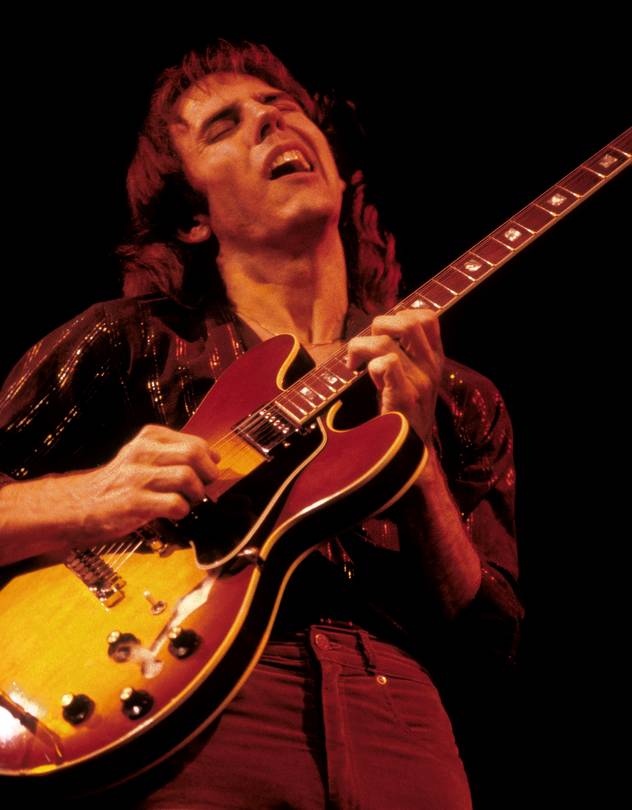
Larry Carlton in 1979
PHOTO: CLAYTON CALL/REDFERNS/GETTY IMAGES
Mr. Fagen: By the mid-‘70s, we were using session players in the studio. Steely Dan became just Walter and myself. We’d handpick musicians for the sound we were looking for on each song. We tended to go through quite a few musicians looking for the results we wanted.
Sound-wise,
we were influenced by the jazz albums of engineer Rudy Van Gelder, the engineer who recorded many of those legendary Prestige and Blue Note albums in the 1950s and ‘60s.
Mr. Becker: The thing about Rudy’s recording technique is how he got each instrument to sound intimate, with musicians playing close to the microphones. The way he recorded, you had the continuity of lines and the fatness of tone that made solos jump out. We wanted all of our recordings to sound that way.
Larry Carlton: When I met with Donald, he gave me demos of him singing and playing “Deacon Blues.” I transcribed the chords and built an arrangement for the rhythm section that was tight but left plenty of space for other layers—like horns and background vocals that I knew they would add later.
The song’s famous opening is my guitar and Victor Feldman’s Fender Rhodes electric piano playing the exact same chords and voicings, plus drummer Bernard Purdie’s cymbal figures. To keep the song’s rhythm-section arrangement from sounding stiff, I added guitar ad-libs here and there to create contrast after Donald’s vocal was in place. They were there to frame his voice.
Mr. Fagen: Once the rhythm track and my vocal were set, horns were added to give the song a dreamy, reedy sound. We brought in saxophonist Tom Scott to write the arrangement. We told him we wanted the horns to have a tight,
romantic “Duke Ellington cloud” feel.
Donald Fagen of Steely Dan at Coachella in April
PHOTO: ZACH CORDNER/INVISION/ASSOCIATED PRESS
Tom Scott: When I arrived at the Village Recorder in West Los Angeles, where Donald and Walter were recording, they played me the rhythm track. Donald said he wanted to add four reeds, two trombones and a trumpet—but not a high-note trumpet. I heard right away how I’d arrange the horns—adding 9ths and 11ths and other jazz dissonances that were implied but not there.
I had about a week and a half to write arrangements for all the songs on “Aja” where they wanted horns. For “Deacon Blues,” I used
a sound that mirrored Oliver Nelson’s orchestral style. I wrote in these “rubs”—two notes close together in the middle register played by the tenor and baritone saxophones. This produces a really thick, reedy sound.
Mr. Fagen: When everything was recorded—the rhythm section, the horns and the background vocals—Walter and I sat in the studio listening back and decided we needed a sax solo, someone to speak for the main character. We liked the sound of a tenor saxophonist who played in Johnny Carson’s Tonight Show band, a cat who blew like crazy when the show went to a commercial. He had this gutsy sound, but we didn’t know who it was.
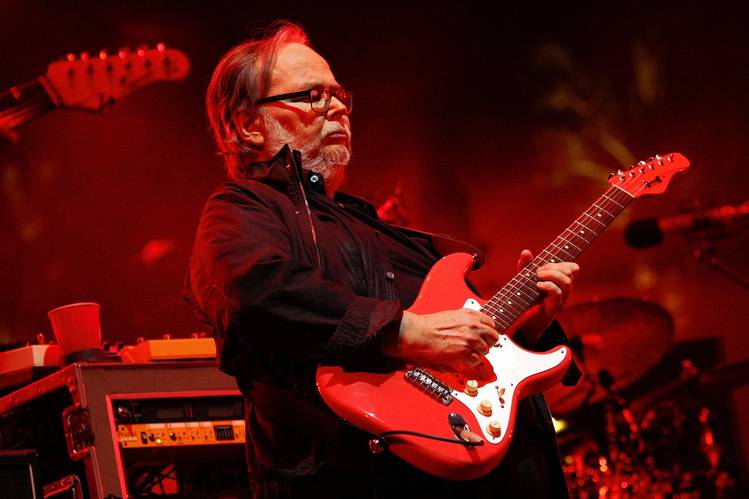
Walter Becker of Steely Dan at Coachella in April
PHOTO: ZACH CORDNER/INVISION/ASSOCIATED PRESS
Mr. Becker: We had our producer Gary Katz ask around and he found out it was Pete Christlieb. Pete had invented
any number of cool harmonic devices that made his playing sound unique. He just sounded like a take-charge soloist, a “gunner.”
Pete Christlieb: I went over to the studio one night after the Tonight Show finished taping at 6:30 p.m. When I listened on headphones to the track Tom had arranged, there was just enough space for me to play a solo.
As I listened, I realized Donald and Walter were using jazz chord changes, not the block chords of rock. This gave me a solid base for improvisation. They just told me to play what I felt. Hey, I’m a jazz musician, that’s what I do. So I listened again and recorded my first solo. We listened back and they said it was great. I recorded a second take and that’s the one they used. I was gone in a half-hour. The next thing I know I’m hearing myself in every airport bathroom in the world.
Mr. Fagen: The song’s fade-out at the end was intentional. We used it to make the end feel like a dream fading off into the night.
Mr. Becker: “Deacon Blues” was special for me. It’s the only time I remember mixing a record all day and, when the mix was done, feeling like I wanted to hear it over and over again. It was the comprehensive sound of the thing: the song itself, its character, the way the instruments sounded and the way Tom Scott’s tight horn arrangement fit in.
Mr. Fagen: One thing we did right on “Deacon Blues” and all of our records: We never tried to accommodate the mass market. We worked for ourselves and still do.



 www.wsj.com