The Game That Changed the Tide of College Football
The South’s domination of college football is rooted in another Alabama and Washington game: The 1926 Rose Bowl
ENLARGE
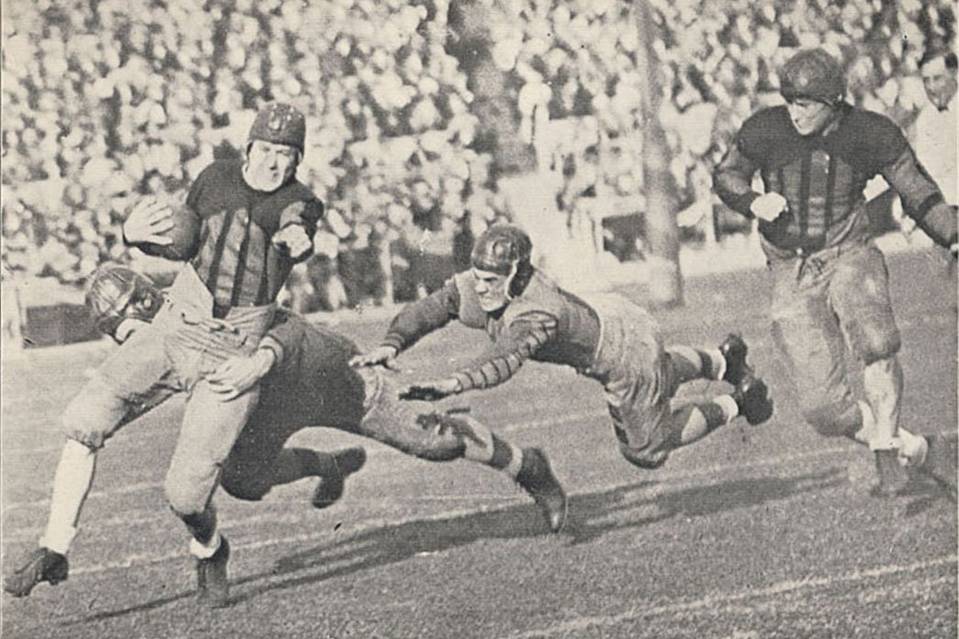
A photo of Alabama’s Johnny Mack Brown in the 1926 Rose Bowl between Washington and Alabama. PHOTO: THE UNIVERSITY OF ALABAMA
By
ANDREW BEATON
Dec. 20, 2016 4:31 p.m. ET
29 COMMENTS
When Alabama and Washington met in the 1926 Rose Bowl, one was a dominant behemoth that left pundits debating not if it would win, but by how much. The other team was a plucky underdog that had put together a stellar season but still faced questions about whether it belonged in the game.
Sound familiar? That dynamic matches the expectations for this year’s coming clash between the two schools in the College Football Playoff semifinals—except the roles are reversed. Then, the Huskies were the indomitable powerhouse. And the Crimson Tide were, in the words of Will Rogers at the time, expected to be “Tusca-losers.”
What followed was not just a shocking upset, but a game that shaped the sport’s modern landscape and was hailed as a cultural triumph in a poverty-stricken region where the bitterness of the Civil War still lingered. Alabama’s stunning 20-19 victory was dubbed “The Game that Changed the South,” an event that launched the region’s football dominance after decades of irrelevance.
Now it’s impossible to think of college football without its southern overlords. Schools from below the Mason-Dixon line have won 10 of the last 11 national championships. Historians say this supremacy may have never come to pass had the 1926 Rose Bowl gone the way everybody expected.
ENLARGE
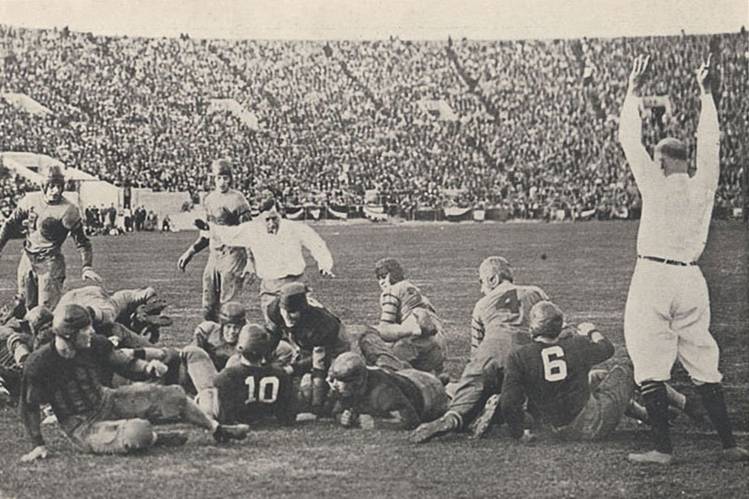
Alabama scores on a touchdown run by Pooley Hubert in the 1926 Rose Bowl. PHOTO: THE UNIVERSITY OF ALABAMA
“It transcended Alabama,” says Tom Rieland, who produced a 1997 documentary titled “Roses of Crimson” on the game for Alabama Public Television. “For once, they had throughout the South something to cheer about. It affected all the coaches and all the teams.”
That regular season, Alabama went undefeated while allowing just seven points. Still, pockets in the Northeast, Midwest and West Coast dominated the sport and there was no reason to take any southern team seriously. A few decades earlier, in 1890, Princeton and Virginia played the first major North vs. South game. Princeton won 116-0.
So when it came to picking teams for the Rose Bowl, organizers looked elsewhere. Dartmouth turned down an invitation to travel across the country to face Washington, and so did Colgate, Michigan and Princeton. They finally settled on the Crimson Tide, but not before insulting them, with a Rose Bowl official remarking, “I’ve never heard of Alabama as a football team.”
“Southern football was to some people considered a laughingstock,” said Lewis Bowling, an author who has written histories of Alabama football. “They were given pretty much no chance at all to beat Washington.”
That Alabama became the first southern team to go to the Rose Bowl was a shock itself. The Crimson Tide’’s first conference championship had come just a year prior. But the university’s president, George Denny—whose name now adorns Alabama’s home stadium in Tuscaloosa—made football a top priority while other schools in the region, such as in-state rival Auburn, at times dismissed the sport’s importance.
As coach Wallace Wade led his Alabama team on a cross-country train ride, stocked with drums of water and interspersed with daily practices along the way, football fever broke out across the region in support of the Crimson Tide.
Newspapers declared the Crimson Tide were out to defend the South’s honor. Letters and telegrams of support poured in from politicians. And in a display of unity unthinkable between modern rivals, even other schools chimed in to declare their immense pride in Alabama’s invitation.
ENLARGE
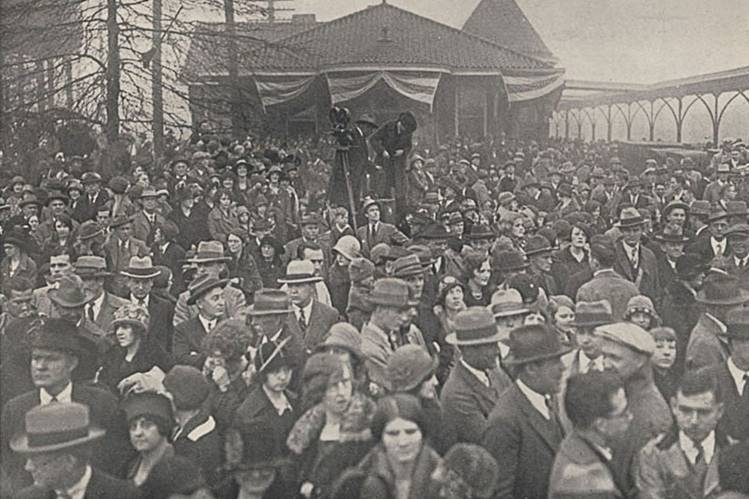
A crowd gathers at the train depot in Tuscaloosa, Ala., to great the Crimson Tide on their return home from Pasadena, Calif. PHOTO: THE UNIVERSITY OF ALABAMA
Washington and coach Enoch Bagshaw, on the other hand, had already established their credibility. They entered the game with 34 wins and just three losses in the previous four seasons. This was their second Rose Bowl appearance, having tied Navy two years earlier. In this 1925 season, the Huskies had gone undefeated (with one tie) and outscored their opponents 461-39.
The game, on Jan. 1, 1926, started just as everyone predicted, as Washington raced out to a 12-0 halftime lead thanks to All-American George Wilson’s dominance on both sides of the ball.
Instead of proving the naysayers wrong, Alabama looked like it would justify all the jokes. At halftime, Wade reportedly said just one thing to his players: “And they told me southern boys would fight.”
Whether it was because of those words—or more likely an injury to Wilson—the Crimson Tide stormed back, highlighted by a 50-yard touchdown catch by Johnny Mack Brown, who later went onto Hollywood fame as an actor. Then the hordes of southerners following along via telegraph read two unbelievable words: “Alabama wins.”
A frenzy erupted. Newspapers declared in its headlines that the South, not just Alabama, won the game. The Atlanta Georgian said that it was “the greatest victory for the South since the first battle of Bull Run.” As the train made its way back to Alabama, the players were mobbed at stops by adoring fans who treated them as if they were returning from victory in war.
The transformative effects on the South were swift. Teams from the region appeared in four of the next six Rose Bowls. Auburn dismissed its president, who had belittled football.
The new attitude was simple: “Well if Alabama can do it, so can we,” says Andy Doyle, an associate professor of history at Winthrop University who has written papers about Southern sports culture. “We’re just as good as you, and this proves it.”
Write to Andrew Beaton at
andrew.beaton@wsj.com