
You are using an out of date browser. It may not display this or other websites correctly.
You should upgrade or use an alternative browser.
You should upgrade or use an alternative browser.
📡 Lobbying. Offering money. Defying what professors said was best for students. Auburn athletics did it all to save a major:
- Thread starter Max
- Start date

Max
Member
1/1
Inside Auburn’s Secret Effort to Advance an Athlete-Friendly Curriculum
The new batch of data was unambiguous. Half of the students in one major were athletes. One in three black players on Auburn’s football team was enrolled in the program.
Rather than question how this might have happened, the university’s provost instead offered a plan: Create more programs like it.
"The following report points to the need for more majors that have enough elective courses etc.," Timothy R. Boosinger, the provost at the time, wrote in the late winter of 2015 to G. Jay Gogue, who was then the president. So many athletes concentrated in one major — public administration — can attract controversy, and it did. Offering more programs with similarly flexible requirements would, Boosinger implied, solve the problem.
The provost assured the president that those other programs were in the works, and that he had met with Jay Jacobs, who was then the athletic director, "to discuss the new offerings that are in the pipeline."
The email and other communications obtained by The Chronicle suggest an openness among Auburn’s academic leaders to tailor a curriculum for the specific benefit of athletes, privately discussing the creation of new majors that would best serve a small but high-profile segment of the student body. These discussions demonstrate the power of athletic interests at universities with big-time sports programs and the quiet ways in which they put pressure on the academic enterprise.
The athletics department’s interest in public administration was first reported by The Wall Street Journal in 2015. Faculty committees had voted to discontinue the program after its centrality to the department’s educational mission was questioned. But Auburn kept the major after a lobbying effort from athletics officials, who at one point offered money to keep it afloat.
In the fall of 2014, 37 percent of Auburn's black male athletes were majoring in public administration.
Auburn officials say that no money came from athletics. In response to questions from The Chronicle, the university said that the athletics department does not unduly influence curricular decisions.
"The shared governance system at Auburn serves as a type of internal watchdog, guarding against the very type of situation at the center of your questioning," C. Michael Clardy, a university spokesman, wrote in an email. "We as an institution are committed to the integrity and rigor of our academic programs."
"All academic decisions," he continued, "are driven and led by academic administration and faculty leadership."
Nevertheless, the university has allowed difficult questions to persist about how the athletics department exerts influence on academic matters. The blanket assertion that faculty control the curriculum, while accurate as a matter of policy, skims over the manner in which athletics officials at Auburn have advocated for the department’s parochial interests, even when doing so defied what professors said was in the best interest of students.
The story behind Auburn’s debate over the fate of a single major provides a striking example of the intractable tensions that exist between academics and athletics on a campus where sports reign supreme. What happened after the public-administration program was exposed shows an arguably deeper problem: Little came of it.
From the moment that Auburn’s faculty started a process that would discontinue the public-administration major, Gary L. Waters surmised what was at stake: The academic fortunes of one of the nation’s premier college athletics programs, including those of its storied football team.
Waters, an accounting and finance professor, had developed close ties with the athletics department during his years as Auburn’s faculty athletics representative, a position charged with ensuring that members of the National Collegiate Athletic Association maintain an appropriate balance between academics and athletics. In 2011, he joined the athletics department as senior associate athletics director for academic services, a position from which he retired in June.
When Waters joined the athletics department, there were just six football players majoring in public administration, documents show. That number quadrupled after his first year on the job, and, in emails, Waters described the program’s proposed elimination in desperate terms. He wanted to take the issue straight to the president, he told Jacobs, the athletics director. Perhaps, Waters suggested, he could lead an unrelated committee about football tickets, which would be an opportunity to "serve the provost" they sought to persuade.
"Rest assured," he wrote to Jacobs, "that as chair of this group my primary responsibility would be to facilitate a discussion on this topic."
Working on multiple tracks, Waters at one point asked Patricia A. Duffy, the chairwoman of the University Senate’s Academic Program Review Committee, whether some extra money might help to keep the program open.
"The Athletics Department," Waters wrote, "would welcome the opportunity to make an investment in the academic side of the university."
When Duffy asked if she could share this offer with her fellow committee members, Waters demurred.
"In the past, when we have made investments of this type, it has not been publicized," Waters wrote in January of 2013.

Kevin C. Cox, Getty Images
Even as Waters worked behind the scenes to save the program, he recognized that cajoling and offering money might not be enough. The plan to phase out public administration, which an external review team of three professors had suggested might not add value to graduates on the job market, was moving through the necessary academic committees. Boosinger, the provost, had already signed off on a plan to close the relatively unpopular major, where less than 1 percent of Auburn students were enrolled. There was still time, however, to stack the program with more players.
A few days before Christmas, in 2012, Waters wrote to Jacobs, "As you and I have discussed, there is currently no policy preventing students from transferring into the program, and any students who are in the program when it closes will be able to finish their degrees."
Waters did not respond to phone messages or emails sent to his university account.
The athletics department’s attempt to stack the program with athletes before it was closed, which has not been previously reported, was a source of considerable tension.
Waters had been told explicitly by Gerard S. (Gerry) Gryski, chairman of the political-science department, where public administration is housed, that it was "not a good option" to place students in a major that was on the chopping block. But Waters persisted.
The football team in particular flocked to public administration, reaching a peak of 33 players in 2013, or 40 percent of scholarship athletes, documents show.
Frustrated, Gryski wrote to colleagues that the program was now "compromised" with students "who were never envisioned as being the principal constituency for this major."
"That’s a disservice to that core group of students and the faculty who teach in this major," Gryski wrote.
Those concerns fell on deaf ears. Boosinger, who stepped down as provost in January, let two months pass before responding to a final faculty committee’s vote to suspend admissions into the program. When Boosinger did finally respond, it was to announce a shocking reversal: The program should stay put, at least until a new dean had a chance to evaluate it.
Boosinger declined interview requests.
Professors and administrators in the College of Liberal Arts were stunned by the provost’s decision, emails show. But their communications also suggest a grudging acceptance of business as usual. Athletics had gotten its way.
"My guess here is that they need some place to put low-performing students who the institution has an interest in keeping academically eligible," Daniel LaRocque, who was then associate dean for academic affairs, wrote to his colleagues.
Anne-Katrin Gramberg, who was dean at the time, replied, "Aha!"
Inside Auburn’s Secret Effort to Advance an Athlete-Friendly Curriculum
The new batch of data was unambiguous. Half of the students in one major were athletes. One in three black players on Auburn’s football team was enrolled in the program.
Rather than question how this might have happened, the university’s provost instead offered a plan: Create more programs like it.
"The following report points to the need for more majors that have enough elective courses etc.," Timothy R. Boosinger, the provost at the time, wrote in the late winter of 2015 to G. Jay Gogue, who was then the president. So many athletes concentrated in one major — public administration — can attract controversy, and it did. Offering more programs with similarly flexible requirements would, Boosinger implied, solve the problem.
The provost assured the president that those other programs were in the works, and that he had met with Jay Jacobs, who was then the athletic director, "to discuss the new offerings that are in the pipeline."
The email and other communications obtained by The Chronicle suggest an openness among Auburn’s academic leaders to tailor a curriculum for the specific benefit of athletes, privately discussing the creation of new majors that would best serve a small but high-profile segment of the student body. These discussions demonstrate the power of athletic interests at universities with big-time sports programs and the quiet ways in which they put pressure on the academic enterprise.
The athletics department’s interest in public administration was first reported by The Wall Street Journal in 2015. Faculty committees had voted to discontinue the program after its centrality to the department’s educational mission was questioned. But Auburn kept the major after a lobbying effort from athletics officials, who at one point offered money to keep it afloat.
In the fall of 2014, 37 percent of Auburn's black male athletes were majoring in public administration.
Auburn officials say that no money came from athletics. In response to questions from The Chronicle, the university said that the athletics department does not unduly influence curricular decisions.
"The shared governance system at Auburn serves as a type of internal watchdog, guarding against the very type of situation at the center of your questioning," C. Michael Clardy, a university spokesman, wrote in an email. "We as an institution are committed to the integrity and rigor of our academic programs."
"All academic decisions," he continued, "are driven and led by academic administration and faculty leadership."
Nevertheless, the university has allowed difficult questions to persist about how the athletics department exerts influence on academic matters. The blanket assertion that faculty control the curriculum, while accurate as a matter of policy, skims over the manner in which athletics officials at Auburn have advocated for the department’s parochial interests, even when doing so defied what professors said was in the best interest of students.
The story behind Auburn’s debate over the fate of a single major provides a striking example of the intractable tensions that exist between academics and athletics on a campus where sports reign supreme. What happened after the public-administration program was exposed shows an arguably deeper problem: Little came of it.
From the moment that Auburn’s faculty started a process that would discontinue the public-administration major, Gary L. Waters surmised what was at stake: The academic fortunes of one of the nation’s premier college athletics programs, including those of its storied football team.
Waters, an accounting and finance professor, had developed close ties with the athletics department during his years as Auburn’s faculty athletics representative, a position charged with ensuring that members of the National Collegiate Athletic Association maintain an appropriate balance between academics and athletics. In 2011, he joined the athletics department as senior associate athletics director for academic services, a position from which he retired in June.
When Waters joined the athletics department, there were just six football players majoring in public administration, documents show. That number quadrupled after his first year on the job, and, in emails, Waters described the program’s proposed elimination in desperate terms. He wanted to take the issue straight to the president, he told Jacobs, the athletics director. Perhaps, Waters suggested, he could lead an unrelated committee about football tickets, which would be an opportunity to "serve the provost" they sought to persuade.
"Rest assured," he wrote to Jacobs, "that as chair of this group my primary responsibility would be to facilitate a discussion on this topic."
Working on multiple tracks, Waters at one point asked Patricia A. Duffy, the chairwoman of the University Senate’s Academic Program Review Committee, whether some extra money might help to keep the program open.
"The Athletics Department," Waters wrote, "would welcome the opportunity to make an investment in the academic side of the university."
When Duffy asked if she could share this offer with her fellow committee members, Waters demurred.
"In the past, when we have made investments of this type, it has not been publicized," Waters wrote in January of 2013.
Kevin C. Cox, Getty Images
Even as Waters worked behind the scenes to save the program, he recognized that cajoling and offering money might not be enough. The plan to phase out public administration, which an external review team of three professors had suggested might not add value to graduates on the job market, was moving through the necessary academic committees. Boosinger, the provost, had already signed off on a plan to close the relatively unpopular major, where less than 1 percent of Auburn students were enrolled. There was still time, however, to stack the program with more players.
A few days before Christmas, in 2012, Waters wrote to Jacobs, "As you and I have discussed, there is currently no policy preventing students from transferring into the program, and any students who are in the program when it closes will be able to finish their degrees."
Waters did not respond to phone messages or emails sent to his university account.
The athletics department’s attempt to stack the program with athletes before it was closed, which has not been previously reported, was a source of considerable tension.
Waters had been told explicitly by Gerard S. (Gerry) Gryski, chairman of the political-science department, where public administration is housed, that it was "not a good option" to place students in a major that was on the chopping block. But Waters persisted.
The football team in particular flocked to public administration, reaching a peak of 33 players in 2013, or 40 percent of scholarship athletes, documents show.
Frustrated, Gryski wrote to colleagues that the program was now "compromised" with students "who were never envisioned as being the principal constituency for this major."
"That’s a disservice to that core group of students and the faculty who teach in this major," Gryski wrote.
Those concerns fell on deaf ears. Boosinger, who stepped down as provost in January, let two months pass before responding to a final faculty committee’s vote to suspend admissions into the program. When Boosinger did finally respond, it was to announce a shocking reversal: The program should stay put, at least until a new dean had a chance to evaluate it.
Boosinger declined interview requests.
Professors and administrators in the College of Liberal Arts were stunned by the provost’s decision, emails show. But their communications also suggest a grudging acceptance of business as usual. Athletics had gotten its way.
"My guess here is that they need some place to put low-performing students who the institution has an interest in keeping academically eligible," Daniel LaRocque, who was then associate dean for academic affairs, wrote to his colleagues.
Anne-Katrin Gramberg, who was dean at the time, replied, "Aha!"
Max
Member
2/2
The public-administration episode would quickly have faded from memory if not for Michael L. Stern.
Stern, chairman of Auburn’s economics department, was the first to openly raise concerns about the number of athletes majoring in public administration — a trend that one of his colleagues had noticed while watching a Tigers football game. During a University Senate meeting, in 2014, Stern challenged a report from Mary K. Boudreaux, who was then Auburn’s faculty athletics representative, for her assertion that there was no clustering happening at Auburn, a transcript of the meeting shows.

Kevin D. Liles for The Chronicle
Michael Stern, chairman of Auburn’s economics department, received a trove of documents about the university’s curricular decisions through a public-records request.
When pressed by Stern about public administration specifically, Boudreaux responded, "I have no problem with public administration. Sounds like a good major to me. But anyway, thank you."
At the time, Stern had no sense of the larger story of the athletics department’s behind-the-scenes lobbying to keep the major in place. But he quickly realized he had touched a nerve. The following night, Joseph A. Aistrup, the dean who had retained the program, fired off an email to Stern.
"My most favorite chair," Aistrup wrote. "Did you miss that lecture on diplomacy? I hope I don’t need to explain to someone as gifted and as smart as you that you could have made your point about Athletic Advisors without mentioning any department at the Faculty Senate meeting, especially in our college.
"I know you were trying to beat up on Athletic Advisors, but your remarks did cause collateral damage on PA, in a very public way. They are up in arms, and I don’t blame them.
"Would you consider an apology to your colleagues in PA?
"I highly recommend it and would appreciate it."
Aistrup declined interview requests.
Impolitic though Stern’s approach may have been, he prompted the provost to look into the situation — a little bit. But when Boosinger learned from Waters that more than half of the major’s students were athletes, the conversation quickly turned to where they might direct athletes next.
"As we move forward with the plans for adult education, criminology, and Interdisciplinary Studies/Sports Management, the number of student-athletes enrolled in Public Administration is expected to decline," Waters wrote in February 2014.
Who was "we"?
What were the "plans"?
When the provost was later asked those questions before the University Senate, he said the email was innocent shorthand. Waters and the athletics department, Boosinger said, were not in the business of developing new majors.
"I think he is using ‘we’ in the broadest sense," he said.
None of those programs were created, Auburn officials said. But the trio of majors discussed appears less than random. Two of them, criminal justice and adult education, had existed in the past and were closed around 2006, following a New York Times report that professors in those programs had taught unusual numbers of independent-study-style classes that helped some Auburn football players remain eligible.
Bill C. Hardgrave, who became Auburn’s provost in January, said the university evaluates changes in its curriculum based on what is best for students.
"We’re absolutely committed to academic integrity, and we make every decision based on how it best equips our students to lead, engage and influence," Hardgrave said in an email. "Any suggestion to the contrary is simply false."
Hardgrave is among several new administrators at Auburn, where Steven Leath, former president of Iowa State, became president in June. A new athletics director took the helm at Auburn this month.
The prevailing view of the college sports establishment is that the crowding of athletes in a particular major, in and of itself, is not inherently bad or suggestive of academic fraud. Patterns of the sort on display at Auburn, however, invite thorny questions about whether the academic careers of athletes are artificially constrained — particularly among underrepresented minorities.
Peter S. Finley, an associate professor of sport management at Nova Southeastern University who has studied athletic clustering, frames the problem bluntly: "They are encouraged to major in eligibility," he said.
Researchers have reported that athletic clustering is more common among nonwhite athletes, and that was true at Auburn.
An internal investigation of public administration found that, in the fall of 2014, 37 percent of Auburn’s black male athletes were enrolled in the major.
At the same time, scarcely any black male students who were not athletes — just two of 581 — majored in the program.
What did black men outside of athletics choose to study? The most-popular major was mechanical engineering — the same as for white men.
Tommy E. Jackson II, who played nose tackle on the Tigers’ undefeated 2004 football squad and majored in public administration, said he had legitimate interests in the program and did not feel pressured to study it. But Jackson, who returned to Auburn to complete a doctorate in adult education and worked in the university’s Student-Athlete Support Services office, said it was disturbing to consider that black men like himself might have been constrained in their paths of study.
"If there were efforts to ‘game’ the system to provide a less rigorous and authentic educational experience for athletes without thinking about the long-term consequences for those athletes, that is wrong," Jackson, who is now director of advising for Kennesaw State University’s University College, said in a written statement to The Chronicle. "This is particularly true for African-American athletes who are disproportionately from families in poverty, who are trading their time, talent, and physical health for the social and economic opportunities that can be provided by the right university education — their one shot at the ‘American Dream.’"
Athletes, he continued, can achieve at high levels academically — but only if they are treated as "something other than a transactional touchdown machine."
RELATED CONTENT
But the athletics department labored to link the fate of the program with the success of Auburn’s black undergraduates, just 8 percent of whom are athletes. In a memo titled "Talking Points to Share with President Gogue/Provost Boosinger," Waters suggested that Jacobs, the athletics director, tell the university’s academic leaders that doing away with the major could compromise Auburn’s already "substandard" African-American graduation rate and imperil its U.S. News & World Report rankings.
Not long after the provost met with Waters and Jacobs to discuss those talking points, Boosinger decided to keep the program.
The story of the provost’s turnaround, laid out in hundreds of pages of emails and other documents from the university’s investigation, was provided to Stern through a public-records request. It was a story that Stern says he had intended to tell to the University Senate, but the steering committee voted against putting him on the group’s agenda. So Stern leaked everything to The Wall Street Journal.
What has happened at Auburn since then is significant in its own right. The story was quickly absorbed in the sober confines of an academic committee, and professors by and large showed a greater interest in defending the public-administration program than they did in questioning its appeal to athletes. All the while, enrollment in the major has dwindled, and professors have not been given reports about whether athletes simply flocked to another program.
In the days after the Journal published its story, the provost emailed professors to say that he had "closely examined the facts of this matter" and "found no basis for a claim of impropriety."
"That is a boring story, I fear, but it is the truth," Boosinger wrote.
The provost had appointed a committee to explore the issue of athletics clustering at Auburn and similar trends at other universities, but the group did not set out to deeply interrogate whether athletics had interfered in curricular matters.
"I did not see that as the primary charge at all," said Daniel J. Svyantek, a psychology professor who was chairman of the committee.
To the extent that the report questions why the program was retained, it does so at a scholarly remove. These decisions, the committee wrote, were consistent with those of "organized anarchies," acting in a manner that may appear as "non-rational" to outside observers. (By way of translation, Svyantek told The Chronicle that college administrators may be "dumb," but not necessarily malicious.)
The committee relied upon the provost, whose actions are central to questions about who controls the curriculum, to provide the group with relevant emails — only to later discover that a number of germane communications among athletics officials had been left out.
Svyantek said he did not believe that any of the additional emails would have changed his report.
The group did not talk to academic advisers, professors in public administration, or athletes in the major. Instead, the committee assessed whether athletes had been steered toward public administration by interviewing Waters, the athletics official who had played a key role in lobbying the administration to retain the program. Waters told the committee that athletes were not formally steered toward the program, but offered that they might have influenced one another independent of any formal guidance.
The committee recommended, among other things, a broader examination of grading patterns in public administration. Auburn officials said that a further review had been conducted and that it similarly found no evidence of favoritism in grading.
But the findings of that review were not shared with the University Senate. Nor did Auburn’s faculty have an opportunity to scrutinize the committee’s report, which, Svyantek said, was "for the provost" and provided only to the provost.
"As far as I know nothing was done with the report," Svyantek said.
The Chronicle obtained materials from Auburn’s internal review of grade distributions. While it may not have identified evidence of favoritism toward athletes, the review examined numerous course sections where the passage rates for all students reached 100 percent. In a 4000-level class geared toward seniors, an instructor awarded A’s or B’s to 90 percent or more of his students across four different sections.
Meantime, enrollment in public administration has plummeted. In the four years since the first questions were raised about athletes in the program, the number of public-administration majors has fallen by 41 percent, to 66 students this past fall. The decline has been particularly precipitous among African-American men, whose numbers have dwindled to a dozen, a 72-percent decrease.
The major, which had a high number of elective offerings when athletics enrollments peaked, may have been appealing in part for its flexibility. In the years since public administration drew scrutiny, professors have tweaked the curriculum, reducing the number of electives.
Clardy, the university’s spokesman, said that Auburn does not know why enrollment fell so fast, because the university does not "catalog specific motivations" for students’ selection of majors. He posited that the reduction of electives may have been a factor, but he dismissed the suggestion that athletes might have been steered away from the program once it drew attention.
"There is no evidence that Auburn discourages student-athletes from enrolling in the public administration program," Clardy wrote in an email. "Students make their own decisions of what majors and programs to pursue. Any implication that the administration has persuaded them in a particular direction is misguided."
“I didn't see that half the students were athletes. I don't track that information.”
Kathleen M. Hale, director of public administration, says she has not questioned how so many athletes came to be in the major and she does not see it within her purview to do so.
"I didn’t see that half the students were athletes," Hale said. "I don’t track that information. I’ve known all I can know within the limits of time and space.
"I’m an active researcher and publisher and a pretty good teacher, and I’m active out in the discipline," she continued. "I hope it’s not disappointing that I didn’t work 300 hours in one week."
Much as the university has tried to put this episode behind it, relationships that soured in the immediate aftermath have only gotten worse.
Tensions between Stern, the economics chairman, and Aistrup, his dean, escalated to such a point in early 2017 that the president at the time intervened. After what Stern described as several acts of retaliation for whistle-blowing, including the dean’s efforts to have him replaced as chairman, Gogue took the highly unusual step of suggesting that the entire economics department be moved elsewhere.
In a memo written on presidential letterhead, Gogue recommended that Stern be assigned a new supervisor and that the department "no longer be a part of the College of Liberal Arts."
But the proposal died shortly after Gogue retired from the presidency.
“What they have done to me is necessary to keep people in line.”
"What they have done to me is necessary to keep people in line, or you will have other people who will speak out," says Stern, who provided The Chronicle with the documents that he had previously given to The Wall Street Journal and other materials he obtained afterward. "There must be penalties for those who don’t play ball, and there have to be rewards for those who do. Auburn has been cleansed of dissent."
Gogue did not respond to interview requests. Nor did Leath, his successor.
Clardy, the university’s spokesman, said that Gogue had second thoughts about moving the department. The Chronicle requested documentation of the president’s change of directive, but none was provided.
Some economics faculty members say that they are convinced that the dean has it in for them, and that the feud has gotten personal. The antipathy is so strong that no one seemed to blink when a professor put a picture of Aistrup arm in arm with Jacobs, the athletics director, on his office door, alongside photos of Joseph Stalin and Kim Jong-un.
Longtime observers of the university see this latest conflict as part of a cycle at Auburn, where critics inspire fleeting consternation and public outrage, only to see the university shrug and move on until athletics overreaches again. It is a pattern that Mark Burns, a retired associate professor of political science who taught occasional courses in public administration, describes as deeply embedded in the university’s history and culture.
Burns and his wife, who also spoke to The Chronicle, both recall an incident about 25 years ago when an athletics official, whose name they could not remember, called to ask whether a health-administration program that Burns had established would be "a good major for a student athlete."
Burns, naïvely, asked about the student’s academic interests.
"He said, You don’t understand, would it be a good major?" Burns recalls.
There were a lot of promising career avenues for graduates of the program, Burns continued. There was also a tough math requirement.
"I said, Now you tell me, would this be a good major for a student athlete?’" Burns recalls. "And he said, Nice talking to you."
The public-administration episode would quickly have faded from memory if not for Michael L. Stern.
Stern, chairman of Auburn’s economics department, was the first to openly raise concerns about the number of athletes majoring in public administration — a trend that one of his colleagues had noticed while watching a Tigers football game. During a University Senate meeting, in 2014, Stern challenged a report from Mary K. Boudreaux, who was then Auburn’s faculty athletics representative, for her assertion that there was no clustering happening at Auburn, a transcript of the meeting shows.
Kevin D. Liles for The Chronicle
Michael Stern, chairman of Auburn’s economics department, received a trove of documents about the university’s curricular decisions through a public-records request.
When pressed by Stern about public administration specifically, Boudreaux responded, "I have no problem with public administration. Sounds like a good major to me. But anyway, thank you."
At the time, Stern had no sense of the larger story of the athletics department’s behind-the-scenes lobbying to keep the major in place. But he quickly realized he had touched a nerve. The following night, Joseph A. Aistrup, the dean who had retained the program, fired off an email to Stern.
"My most favorite chair," Aistrup wrote. "Did you miss that lecture on diplomacy? I hope I don’t need to explain to someone as gifted and as smart as you that you could have made your point about Athletic Advisors without mentioning any department at the Faculty Senate meeting, especially in our college.
"I know you were trying to beat up on Athletic Advisors, but your remarks did cause collateral damage on PA, in a very public way. They are up in arms, and I don’t blame them.
"Would you consider an apology to your colleagues in PA?
"I highly recommend it and would appreciate it."
Aistrup declined interview requests.
Impolitic though Stern’s approach may have been, he prompted the provost to look into the situation — a little bit. But when Boosinger learned from Waters that more than half of the major’s students were athletes, the conversation quickly turned to where they might direct athletes next.
"As we move forward with the plans for adult education, criminology, and Interdisciplinary Studies/Sports Management, the number of student-athletes enrolled in Public Administration is expected to decline," Waters wrote in February 2014.
Who was "we"?
What were the "plans"?
When the provost was later asked those questions before the University Senate, he said the email was innocent shorthand. Waters and the athletics department, Boosinger said, were not in the business of developing new majors.
"I think he is using ‘we’ in the broadest sense," he said.
None of those programs were created, Auburn officials said. But the trio of majors discussed appears less than random. Two of them, criminal justice and adult education, had existed in the past and were closed around 2006, following a New York Times report that professors in those programs had taught unusual numbers of independent-study-style classes that helped some Auburn football players remain eligible.
Bill C. Hardgrave, who became Auburn’s provost in January, said the university evaluates changes in its curriculum based on what is best for students.
"We’re absolutely committed to academic integrity, and we make every decision based on how it best equips our students to lead, engage and influence," Hardgrave said in an email. "Any suggestion to the contrary is simply false."
Hardgrave is among several new administrators at Auburn, where Steven Leath, former president of Iowa State, became president in June. A new athletics director took the helm at Auburn this month.
The prevailing view of the college sports establishment is that the crowding of athletes in a particular major, in and of itself, is not inherently bad or suggestive of academic fraud. Patterns of the sort on display at Auburn, however, invite thorny questions about whether the academic careers of athletes are artificially constrained — particularly among underrepresented minorities.
Peter S. Finley, an associate professor of sport management at Nova Southeastern University who has studied athletic clustering, frames the problem bluntly: "They are encouraged to major in eligibility," he said.
Researchers have reported that athletic clustering is more common among nonwhite athletes, and that was true at Auburn.
An internal investigation of public administration found that, in the fall of 2014, 37 percent of Auburn’s black male athletes were enrolled in the major.
At the same time, scarcely any black male students who were not athletes — just two of 581 — majored in the program.
What did black men outside of athletics choose to study? The most-popular major was mechanical engineering — the same as for white men.
Tommy E. Jackson II, who played nose tackle on the Tigers’ undefeated 2004 football squad and majored in public administration, said he had legitimate interests in the program and did not feel pressured to study it. But Jackson, who returned to Auburn to complete a doctorate in adult education and worked in the university’s Student-Athlete Support Services office, said it was disturbing to consider that black men like himself might have been constrained in their paths of study.
"If there were efforts to ‘game’ the system to provide a less rigorous and authentic educational experience for athletes without thinking about the long-term consequences for those athletes, that is wrong," Jackson, who is now director of advising for Kennesaw State University’s University College, said in a written statement to The Chronicle. "This is particularly true for African-American athletes who are disproportionately from families in poverty, who are trading their time, talent, and physical health for the social and economic opportunities that can be provided by the right university education — their one shot at the ‘American Dream.’"
Athletes, he continued, can achieve at high levels academically — but only if they are treated as "something other than a transactional touchdown machine."
RELATED CONTENT
- Who Should Oversee Athletes’ Academic Progress? PREMIUM
- Missed Classes, a Changed Grade, and One Disillusioned Adviser PREMIUM
- The Hottest Hire in Athletics? Learning Specialists PREMIUM
But the athletics department labored to link the fate of the program with the success of Auburn’s black undergraduates, just 8 percent of whom are athletes. In a memo titled "Talking Points to Share with President Gogue/Provost Boosinger," Waters suggested that Jacobs, the athletics director, tell the university’s academic leaders that doing away with the major could compromise Auburn’s already "substandard" African-American graduation rate and imperil its U.S. News & World Report rankings.
Not long after the provost met with Waters and Jacobs to discuss those talking points, Boosinger decided to keep the program.
The story of the provost’s turnaround, laid out in hundreds of pages of emails and other documents from the university’s investigation, was provided to Stern through a public-records request. It was a story that Stern says he had intended to tell to the University Senate, but the steering committee voted against putting him on the group’s agenda. So Stern leaked everything to The Wall Street Journal.
What has happened at Auburn since then is significant in its own right. The story was quickly absorbed in the sober confines of an academic committee, and professors by and large showed a greater interest in defending the public-administration program than they did in questioning its appeal to athletes. All the while, enrollment in the major has dwindled, and professors have not been given reports about whether athletes simply flocked to another program.
In the days after the Journal published its story, the provost emailed professors to say that he had "closely examined the facts of this matter" and "found no basis for a claim of impropriety."
"That is a boring story, I fear, but it is the truth," Boosinger wrote.
The provost had appointed a committee to explore the issue of athletics clustering at Auburn and similar trends at other universities, but the group did not set out to deeply interrogate whether athletics had interfered in curricular matters.
"I did not see that as the primary charge at all," said Daniel J. Svyantek, a psychology professor who was chairman of the committee.
To the extent that the report questions why the program was retained, it does so at a scholarly remove. These decisions, the committee wrote, were consistent with those of "organized anarchies," acting in a manner that may appear as "non-rational" to outside observers. (By way of translation, Svyantek told The Chronicle that college administrators may be "dumb," but not necessarily malicious.)
The committee relied upon the provost, whose actions are central to questions about who controls the curriculum, to provide the group with relevant emails — only to later discover that a number of germane communications among athletics officials had been left out.
Svyantek said he did not believe that any of the additional emails would have changed his report.
The group did not talk to academic advisers, professors in public administration, or athletes in the major. Instead, the committee assessed whether athletes had been steered toward public administration by interviewing Waters, the athletics official who had played a key role in lobbying the administration to retain the program. Waters told the committee that athletes were not formally steered toward the program, but offered that they might have influenced one another independent of any formal guidance.
The committee recommended, among other things, a broader examination of grading patterns in public administration. Auburn officials said that a further review had been conducted and that it similarly found no evidence of favoritism in grading.
But the findings of that review were not shared with the University Senate. Nor did Auburn’s faculty have an opportunity to scrutinize the committee’s report, which, Svyantek said, was "for the provost" and provided only to the provost.
"As far as I know nothing was done with the report," Svyantek said.
The Chronicle obtained materials from Auburn’s internal review of grade distributions. While it may not have identified evidence of favoritism toward athletes, the review examined numerous course sections where the passage rates for all students reached 100 percent. In a 4000-level class geared toward seniors, an instructor awarded A’s or B’s to 90 percent or more of his students across four different sections.
Meantime, enrollment in public administration has plummeted. In the four years since the first questions were raised about athletes in the program, the number of public-administration majors has fallen by 41 percent, to 66 students this past fall. The decline has been particularly precipitous among African-American men, whose numbers have dwindled to a dozen, a 72-percent decrease.
The major, which had a high number of elective offerings when athletics enrollments peaked, may have been appealing in part for its flexibility. In the years since public administration drew scrutiny, professors have tweaked the curriculum, reducing the number of electives.
Clardy, the university’s spokesman, said that Auburn does not know why enrollment fell so fast, because the university does not "catalog specific motivations" for students’ selection of majors. He posited that the reduction of electives may have been a factor, but he dismissed the suggestion that athletes might have been steered away from the program once it drew attention.
"There is no evidence that Auburn discourages student-athletes from enrolling in the public administration program," Clardy wrote in an email. "Students make their own decisions of what majors and programs to pursue. Any implication that the administration has persuaded them in a particular direction is misguided."
“I didn't see that half the students were athletes. I don't track that information.”
Kathleen M. Hale, director of public administration, says she has not questioned how so many athletes came to be in the major and she does not see it within her purview to do so.
"I didn’t see that half the students were athletes," Hale said. "I don’t track that information. I’ve known all I can know within the limits of time and space.
"I’m an active researcher and publisher and a pretty good teacher, and I’m active out in the discipline," she continued. "I hope it’s not disappointing that I didn’t work 300 hours in one week."
Much as the university has tried to put this episode behind it, relationships that soured in the immediate aftermath have only gotten worse.
Tensions between Stern, the economics chairman, and Aistrup, his dean, escalated to such a point in early 2017 that the president at the time intervened. After what Stern described as several acts of retaliation for whistle-blowing, including the dean’s efforts to have him replaced as chairman, Gogue took the highly unusual step of suggesting that the entire economics department be moved elsewhere.
In a memo written on presidential letterhead, Gogue recommended that Stern be assigned a new supervisor and that the department "no longer be a part of the College of Liberal Arts."
But the proposal died shortly after Gogue retired from the presidency.
“What they have done to me is necessary to keep people in line.”
"What they have done to me is necessary to keep people in line, or you will have other people who will speak out," says Stern, who provided The Chronicle with the documents that he had previously given to The Wall Street Journal and other materials he obtained afterward. "There must be penalties for those who don’t play ball, and there have to be rewards for those who do. Auburn has been cleansed of dissent."
Gogue did not respond to interview requests. Nor did Leath, his successor.
Clardy, the university’s spokesman, said that Gogue had second thoughts about moving the department. The Chronicle requested documentation of the president’s change of directive, but none was provided.
Some economics faculty members say that they are convinced that the dean has it in for them, and that the feud has gotten personal. The antipathy is so strong that no one seemed to blink when a professor put a picture of Aistrup arm in arm with Jacobs, the athletics director, on his office door, alongside photos of Joseph Stalin and Kim Jong-un.
Longtime observers of the university see this latest conflict as part of a cycle at Auburn, where critics inspire fleeting consternation and public outrage, only to see the university shrug and move on until athletics overreaches again. It is a pattern that Mark Burns, a retired associate professor of political science who taught occasional courses in public administration, describes as deeply embedded in the university’s history and culture.
Burns and his wife, who also spoke to The Chronicle, both recall an incident about 25 years ago when an athletics official, whose name they could not remember, called to ask whether a health-administration program that Burns had established would be "a good major for a student athlete."
Burns, naïvely, asked about the student’s academic interests.
"He said, You don’t understand, would it be a good major?" Burns recalls.
There were a lot of promising career avenues for graduates of the program, Burns continued. There was also a tough math requirement.
"I said, Now you tell me, would this be a good major for a student athlete?’" Burns recalls. "And he said, Nice talking to you."


Long read here...interesting read, though.
I suspect with the FBI probe, etc., we're going to be seeing "they've got it out for us" pretty soon. It's a "head buried in sand" mentality as evidence by the replies to this tweet.
Auburn says it's not true. Therefore...
I suspect with the FBI probe, etc., we're going to be seeing "they've got it out for us" pretty soon. It's a "head buried in sand" mentality as evidence by the replies to this tweet.

Long read here...interesting read, though.
Yes, very interesting.

50+yeartidefan
Member


JoseyWalesTheOutlaw
Member
JoseyWalesTheOutlaw
Member
My name is Cadillac Williams and I haz a KrayonClass of coloring books! Just stay between the lines!

The Old Ball Coach? HuH!Class of coloring books! Just stay between the lines!
I've seen the suggestion from more than one it is the "North Carolina model."Organized dummy classes that were made available to the students. This sounds like a poor man's version of North Carolina.

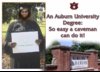

So.... the Barn burning again?
"As the Plains Burn" Part Deux?
JoseyWalesTheOutlaw
Member
Pretty sure this isn't the first time Auburn got busted on something like this, right? I can't remember what the class was but like half the football team was taking that one class.
Not along the Barn football team was doing better than Vandy players....good ole auburn....
Auburn Is First In One Ranking, 85th in Another
-

Thread 'Spring Practice 2026: Reports and Update'
Practice (#5) resumes next week following spring break- Justneedme81
- Replies: 105
-

Thread '⛈ Our 2026 Weather / home projects thread.'
What's on your 'project list' for '26?- bamaledge
- Replies: 372
-

🏈 - 2026 Alabama Roster Management Chart and Portal news
The latest on who's in and who's out.- Brandon Van de Graaff
- Replies: 1,655
-
Thread 'Anybody watched any good new shows or series lately?'
The off-season "blues." What to watch?- Brandon Van de Graaff
- Replies: 246


