
bama alum
Member
http://www.saturdaydownsouth.com/al...don-henry-bringing-physicality-back-capstone/
Let’s be honest here, Alabama Crimson Tide fans. Many of us were looking for ways that new offensive coordinator Lane Kiffin would mess up the offense, opposed to concentrating on aspects that he could actually make improvements on.
Due to his checkered past — and I use that term loosely — many have actually forgotten just how great of an offensive mind Kiffin has. His ability to exploit matchups is unparalleled, although some are already whining about tight end O.J. Howard being blanked from the statsheet, and he forces defenses to defend every quadrant of the field.
But for fans of how most interpret football should be played at the Capstone, the season-opening victory against the West Virginia Mountaineers went a long way into providing proof that smashmouth football is back in Tuscaloosa.
And furthermore, it went a long way into proving that Bama’s running backs are proficient running in any blocking scheme as some may have intimated that they were more of a fit for the finesse style of days past.
Buckle your chinstraps, Southeastern Conference. The Between-the-tackles game is back!
Diversified Philosophy
With Kiffin’s background in the West Coast offense – most notably under Norm Chow at USC (who served as offensive coordinator for Steve Young, Jim McMahon and Ty Detmer at BYU) — we already knew that more of a rhythm-and-timing style was arriving in the passing game.
Quarterbacks Blake Sims and Jake Coker would be provided 3- and 5-step drops, hitches, moving pockets, play action and plenty of bubble screens for their arsenal. But this is Alabama, where it all boils down to what the Tide can accomplish on the ground.
And between running backs T.J. Yeldon, Derrick Henry, Kenyan Drake, Altee Tenpenny and Tyren Jones, Kiffin may never find himself around so much elite talent at the position again. So the question was poised: Can Kiffin replicate what he did as a co-offensive coordinator for USC in the run game?
After one game, the answer is an emphatic yes!
Yeldon rushed 23 times for 126 yards with two touchdowns; Henry toted it 17 times for 113 times with a score of his own. Overall the Tide achieved 288 yards on the ground when you factor in Sims’ 42 yards on six attempts.
The results aren’t anything out of the ordinary as the Tide have trotted out some of the best backs in the history of the conference in recent years: Glen Coffee, Mark Ingram, Trent Richardson and Eddie Lacy immediately come to mind.
But while I initially thought the incumbent starter, Yeldon, would get the lion’s share of the carries, Kiffin seems to be making Henry a 1B opposed to a backup — which should satiate the thirst of the fan base who can’t get enough of the super sophomore.
This makes Bama’s rushing attack very similar to that of USC’s when Kiffin (and fellow OC Steve Sarkisian) unleashed the thunder-and-lightning duo of Lendale White and Reggie Bush on college football.
Southern Cal’s 2005 season, which culminated in a thrilling last-second loss in the BCS Championship Game to Texas, saw Bush (200 attempts for 1,740 yards and 16 TDs) and White (197 attempts for 1,319 yards with 24 TDs) chew up yardage in chunks which lessened coverage on the outside for the receivers.
With the greatest QB in Bama history (AJ McCarron) now in the NFL, and with a couple of first-year starters vying for the job, the run game is more important than ever for Alabama.
This means that Kiffin needs to bring the kitchen sink, philosophy-wise, to ensure those QBs are supported by a substantial run game.
Man- and Zone-blocking Scheme
As a fan of smashmouth football, I often struggle with coming to grips that physical football can be achieved with area blocking. Now don’t get me wrong, once a back has the ball in his hands he’s either physical or not.
But there’s something to be said for each offensive lineman getting off the snap and mauling the man in front of him. But watching Bama navigate with area blocking, I’m slowly becoming believer.
Both Yeldon and Henry have the prerequisite skills to operate in a man-blocking scheme, but it seems as though both are more suited for zone blocking.

Here we see the Tide in “12 personnel,” one back and two tight ends, running a single-back counter. In a previous study I did on Henry, I noticed that most of his runs were of the cut-back variety — this was going back to high school.
Despite his tremendous size, 6’3″, 238 pounds, Henry is more of a finesse runner, instinctively. He’d rather outrun run you, rather than run you over. He’s been compared favorably to Georgia superstar Todd Gurley (6’1′, 230 lbs), but size and speed is where the comparisons should end — as Gurley is the ultimate seeker of contact.
Don’t get me wrong, Henry can separate tacklers from their souls off sheer size alone. But his agility is uncanny for his size, and it’s in Kiffin’s best interest to put players in the best position to succeed.
Once left tackle Cam Robinson and Howard seal the edge, Henry is put in a one-on-one situation with a defensive back that he will win 99 out of 100 times.

Yeldon, too, seems to be more suited for a zone-blocking scheme. He has wonderful patience to the hole, and then he kicks it in gear and explodes through the hole. Most think that quicker backs are a great fit for a cut-back scheme, but it’s patient runners like Houston Texans’ star Arian Foster that excel in the scheme.
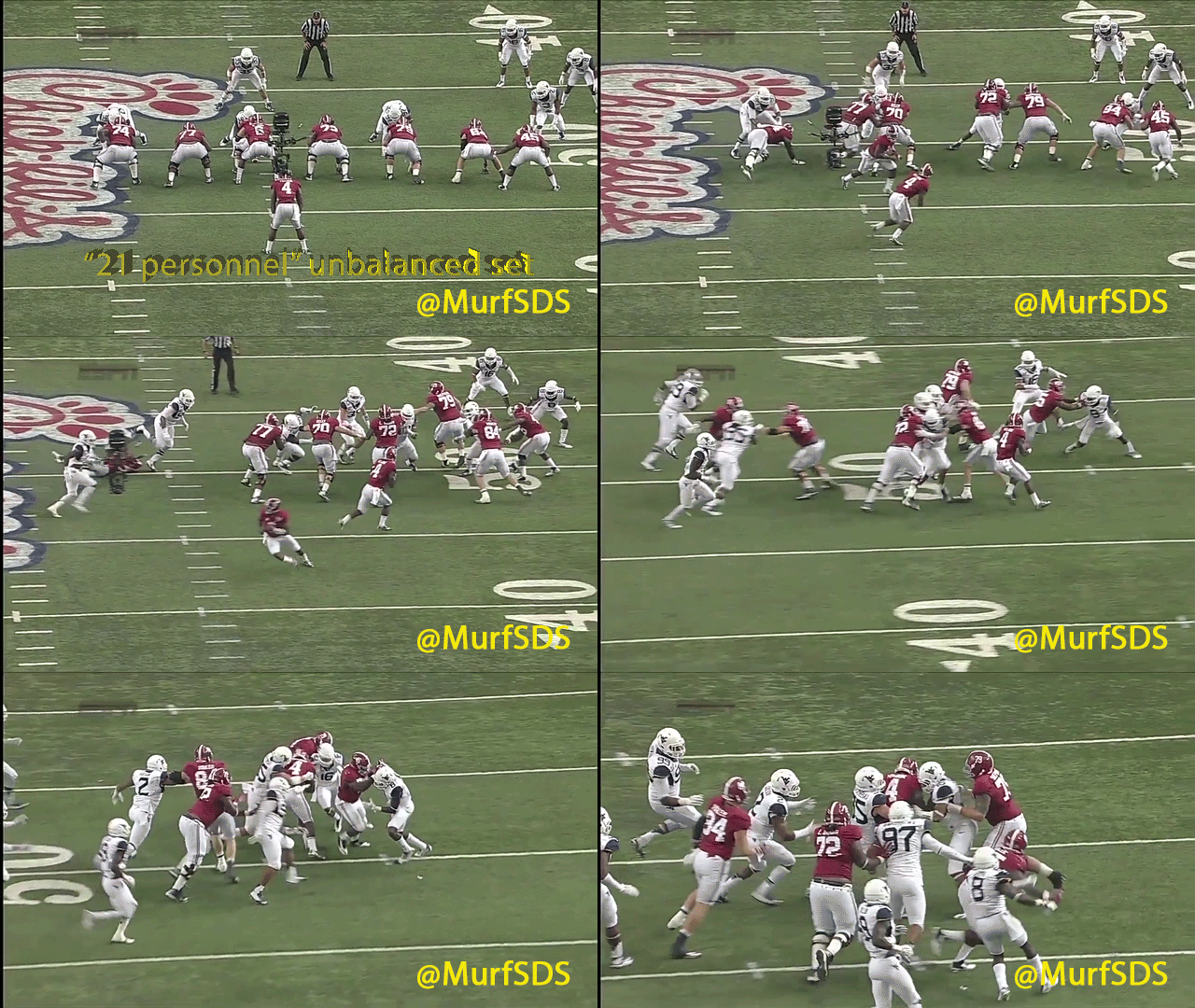
Here Kiffin once again employs a real man’s set, “21 personnel,” which sees Robinson take care of the back-side pursuit with a cut block (which is kind of soft, in my opinion, but it works). But the two extra blockers allows Bama to double up on blocking which helps Yeldon gain some tough yards.
Kiffin has found more use for fullback/H-back Jalston Fowler than former coordinator Doug Nussmeier ever did, and his presence brings a physical element to the Tide’s running attack.
Additionally, you can tell Kiffin worked all offseason with Howard on becoming a better blocker and it showed it Bama’s power scheme.

This right here is big-boy football, Tide fans. On this particular sequence, Bama is back in “12 personnel,” this time operating with man-blocking principles. Every lineman gets a hat on a hat, and Howard provides the trap block which springs Yeldon loose.
Furthermore, Robinson leaks out as the lead blocker and peels back to collect the nickel corner who’s pursuing back side.
Although fans may be a tad bit nervous regarding the situation at quarterback, they should be head over heels with the prospects of the running game with versatility, power and talent.
Now that’s scary notion…for the rest of SEC, that is.
Let’s be honest here, Alabama Crimson Tide fans. Many of us were looking for ways that new offensive coordinator Lane Kiffin would mess up the offense, opposed to concentrating on aspects that he could actually make improvements on.
Due to his checkered past — and I use that term loosely — many have actually forgotten just how great of an offensive mind Kiffin has. His ability to exploit matchups is unparalleled, although some are already whining about tight end O.J. Howard being blanked from the statsheet, and he forces defenses to defend every quadrant of the field.
But for fans of how most interpret football should be played at the Capstone, the season-opening victory against the West Virginia Mountaineers went a long way into providing proof that smashmouth football is back in Tuscaloosa.
And furthermore, it went a long way into proving that Bama’s running backs are proficient running in any blocking scheme as some may have intimated that they were more of a fit for the finesse style of days past.
Buckle your chinstraps, Southeastern Conference. The Between-the-tackles game is back!
Diversified Philosophy
With Kiffin’s background in the West Coast offense – most notably under Norm Chow at USC (who served as offensive coordinator for Steve Young, Jim McMahon and Ty Detmer at BYU) — we already knew that more of a rhythm-and-timing style was arriving in the passing game.
Quarterbacks Blake Sims and Jake Coker would be provided 3- and 5-step drops, hitches, moving pockets, play action and plenty of bubble screens for their arsenal. But this is Alabama, where it all boils down to what the Tide can accomplish on the ground.
And between running backs T.J. Yeldon, Derrick Henry, Kenyan Drake, Altee Tenpenny and Tyren Jones, Kiffin may never find himself around so much elite talent at the position again. So the question was poised: Can Kiffin replicate what he did as a co-offensive coordinator for USC in the run game?
After one game, the answer is an emphatic yes!
Yeldon rushed 23 times for 126 yards with two touchdowns; Henry toted it 17 times for 113 times with a score of his own. Overall the Tide achieved 288 yards on the ground when you factor in Sims’ 42 yards on six attempts.
The results aren’t anything out of the ordinary as the Tide have trotted out some of the best backs in the history of the conference in recent years: Glen Coffee, Mark Ingram, Trent Richardson and Eddie Lacy immediately come to mind.
But while I initially thought the incumbent starter, Yeldon, would get the lion’s share of the carries, Kiffin seems to be making Henry a 1B opposed to a backup — which should satiate the thirst of the fan base who can’t get enough of the super sophomore.
This makes Bama’s rushing attack very similar to that of USC’s when Kiffin (and fellow OC Steve Sarkisian) unleashed the thunder-and-lightning duo of Lendale White and Reggie Bush on college football.
Southern Cal’s 2005 season, which culminated in a thrilling last-second loss in the BCS Championship Game to Texas, saw Bush (200 attempts for 1,740 yards and 16 TDs) and White (197 attempts for 1,319 yards with 24 TDs) chew up yardage in chunks which lessened coverage on the outside for the receivers.
With the greatest QB in Bama history (AJ McCarron) now in the NFL, and with a couple of first-year starters vying for the job, the run game is more important than ever for Alabama.
This means that Kiffin needs to bring the kitchen sink, philosophy-wise, to ensure those QBs are supported by a substantial run game.
Man- and Zone-blocking Scheme
As a fan of smashmouth football, I often struggle with coming to grips that physical football can be achieved with area blocking. Now don’t get me wrong, once a back has the ball in his hands he’s either physical or not.
But there’s something to be said for each offensive lineman getting off the snap and mauling the man in front of him. But watching Bama navigate with area blocking, I’m slowly becoming believer.
Both Yeldon and Henry have the prerequisite skills to operate in a man-blocking scheme, but it seems as though both are more suited for zone blocking.

Here we see the Tide in “12 personnel,” one back and two tight ends, running a single-back counter. In a previous study I did on Henry, I noticed that most of his runs were of the cut-back variety — this was going back to high school.
Despite his tremendous size, 6’3″, 238 pounds, Henry is more of a finesse runner, instinctively. He’d rather outrun run you, rather than run you over. He’s been compared favorably to Georgia superstar Todd Gurley (6’1′, 230 lbs), but size and speed is where the comparisons should end — as Gurley is the ultimate seeker of contact.
Don’t get me wrong, Henry can separate tacklers from their souls off sheer size alone. But his agility is uncanny for his size, and it’s in Kiffin’s best interest to put players in the best position to succeed.
Once left tackle Cam Robinson and Howard seal the edge, Henry is put in a one-on-one situation with a defensive back that he will win 99 out of 100 times.
Yeldon, too, seems to be more suited for a zone-blocking scheme. He has wonderful patience to the hole, and then he kicks it in gear and explodes through the hole. Most think that quicker backs are a great fit for a cut-back scheme, but it’s patient runners like Houston Texans’ star Arian Foster that excel in the scheme.
Here Kiffin once again employs a real man’s set, “21 personnel,” which sees Robinson take care of the back-side pursuit with a cut block (which is kind of soft, in my opinion, but it works). But the two extra blockers allows Bama to double up on blocking which helps Yeldon gain some tough yards.
Kiffin has found more use for fullback/H-back Jalston Fowler than former coordinator Doug Nussmeier ever did, and his presence brings a physical element to the Tide’s running attack.
Additionally, you can tell Kiffin worked all offseason with Howard on becoming a better blocker and it showed it Bama’s power scheme.

This right here is big-boy football, Tide fans. On this particular sequence, Bama is back in “12 personnel,” this time operating with man-blocking principles. Every lineman gets a hat on a hat, and Howard provides the trap block which springs Yeldon loose.
Furthermore, Robinson leaks out as the lead blocker and peels back to collect the nickel corner who’s pursuing back side.
Although fans may be a tad bit nervous regarding the situation at quarterback, they should be head over heels with the prospects of the running game with versatility, power and talent.
Now that’s scary notion…for the rest of SEC, that is.


