
BAMANEWSBOT
Staff
Read More Here...
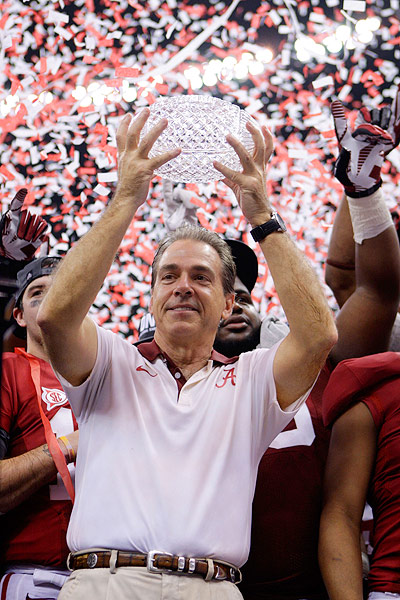
Critics and fans alike have used many words to describe Alabama coach Nick Saban’s salary, which leads the nation at $5.3 million per year. But “modest” likely wasn’t been one of them — until now.
That’s how Forbes writer Tom Van Riper recently described Saban’s pay. The logic? Given the economic impact Alabama football has made on Tuscaloosa during Saban’s tenure, that price tag isn’t so bad. The Crimson Tide’s success has indirectly caused an upswing in university enrollment, faculty employment and athletics revenue.
“Powerhouse football is nothing new at the school, of course. But powerhouse football in the modern media age means, thanks to games beamed across the country on a regular basis, a national marketing platform unlike anything Bama enjoyed in Bear Bryant’s day.”
Saban has won three national titles in Tuscaloosa and compiled a 68-13 record since taking over at Alabama in 2007. The school’s revenue flow has increased accordingly: According to Van Riper’s data, taken from USA Today, Alabama recorded revenue of $124.5 million and a profit of $19.4 million in 2012, an increase from $67.7 million in revenue and $7.1 million in profit in ’07. The football program is the money-driver, accounting for around two-thirds of all athletics revenue and $45 million in profit.
But Van Riper said the Saban effect impacts more than just athletics.
“To appreciate just how modest Saban’s $5.3 million salary is, take a wider look around campus. Since 2007, Tuscaloosa has swelled its undergraduate ranks by 33% to over 28,000 students. Faculty count has kept pace: up 400 since 2007 to over 1,700. But it’s more than growth – it’s where the growth is coming from. According to the school, less than a third of the 2007 freshman class of 4,538 students hailed from out of state. By the fall of 2012, more than half (52%) of a freshman class of 6,397 students did. Various data from US News and the New York Times shows that the school’s out-of-state tuition cost –- nearly three times higher than the rate for in-state students –- rose from $18,000 to $22,950 a year during that period.”
Likewise, Alabama’s admissions process has enjoyed more selectivity during the Saban tenure. According to the report, 64 percent of students applying to Alabama were accepted in 2007. In ’12, 53 percent were accepted, and around one in four students from that class carried a 4.0 high school GPA. Mary Spieigel, executive director of undergraduate admissions, told Van Riper that the university has never before lured such quality students to campus.
Perhaps describing Saban’s salary as “modest” is a stretch, but it’s hard to argue the correlation between the school’s football success and the improvements taking place on the academic side.