

planomateo
Member
Sports Radio WNML is a show outta Tennessee, so its more slanted towards Tennessee finances. Still a good read.
I'm sure some of you saw the note where FSU was going to be cutting their budget by ~2% to help pay for COA.
http://www.sportsradiownml.com/common/more.php?m=49&action=blog&r=11
Detailed look at cost of attendance reveals it could lead to controversy
Mar 16, 2015 -- 1:38pm
By Jimmy Hyams
Sports Radio WNML
Cost of attendance is admirable in principal, but in practice, it could lead to controversy regarding recruiting benefits and formula fraud.
It could also lead to sports being eliminated.
“My biggest fear is this will result in dropping sports, maybe not out of the gate but eventually,” said one SEC athletic director who asked not to be identified. “That would be an unintended consequence.”
Another unintended consequence could be a recruiting advantage for those schools that have a much higher cost of attendance than others.
For example, the annual cost of attendance at Penn State is $4788 and at Michigan $2054. At Michigan State, it will be no more than $1.5 million for about 800 student-athletes in 25 sports. Will that be a recruiting advantage for the Nittany Lions over a prospect torn between other Big Ten schools?
Many school officials think yes. And that’s one reason a lot of eyes are watching closely to see what some schools claim for cost of attendance.
Tennessee’s COA – calculated by the Office of Financial Aid for all students using the Independent Student Allowance method – is $5,666 per year (not counting summer school). That’s $4002 in miscellaneous expenses and $1664 in transportation.
That is $80 more than the next SEC institution – Auburn ($5586). But it is almost $3900 more than Georgia ($1,798), which is on the low end of the SEC spectrum. These numbers are either last year’s figures or projected for the upcoming fiscal year according to information from various websites.
In the SEC, only three schools are over $5000, three schools are in the $4000s, six are in the $3000s and two are below $3000 – Georgia and Vanderbilt ($2,730).
Based on Tennessee’s 260 scholarships at $5,666, the annual cost of attendance to UT’s athletic department will be $1.474 million. Full scholarship student-athletes will get $5,666. An athlete on 50% scholarship will get 50% of the COA. A student on 25% scholarship will get 25% of the COA, etc.
Walk-ons do not get COA.
For travel, UT’s formula is based on allowing three trips per year to Memphis, which is about 388 miles from Knoxville. But if a student-athlete is from California, he/she can appeal for an adjustment.
In the recent past, Florida State and Texas A&M used the student assistance fund to pay policy premiums for career-ending injuries to NFL caliber football players. Tennessee has not done that, a source said.
Could schools start using cost of attendance to pay for such policy premiums? That seems unlikely, since COA applies to all students, not just student-athletes.
One concern is that the COA is being calculated differently from school to school, even though guidelines have been set by the Higher Education Act.
“This cost of attendance calculation is to be completed by applying the same standards, policies, and procedures for athletes as for all other students,” said Greg Sankey, SEC executive associate commissioner.
Sankey noted the NCAA rule is designed to “provide benefits to student-athletes equal to but not greater than their cost of education. The SEC is in the process of evaluating whether any refinements to the rule would be appropriate or desirable.”
But what about the huge difference between UT and Georgia? Will the SEC intervene or review the school’s formulas?
“We do not currently have in place any process for conference-level review of the manner in which schools calculate cost of attendance for purposes of athletic scholarship,” Sankey said.
One reason COA numbers could vary is a difference from school to school in in-state and out-of-state tuition. Some factor in credit hours. UT does not factor credit hours taken, only that the student must be full time (minimum 12 hours.)
Another concern is that the COA at some schools might be considerably higher now than it was before the NCAA permitted COA stipends to student-athletes.
Not all schools have to pay COA stipends, but the pressure to do so will be immense.
“The NCAA says it’s permissive legislation, meaning you don’t have to do it,” said one SEC school official. “Trust me, if you are one of the Power Five Conference teams, you have to do it. But some other conferences might not be able to afford it.”
All SEC schools can financially handle COA. Some – like Tennessee – might use revenues from the recently launched SEC Network to pay for COA.
Over and above cost of attendance, student-athletes may still receive the Pell Grant (up to $5,775 annually) and the needy student fund (for example, travel home for a death in the family).
Some in the NCAA proposed eliminating the Pell Grant and needy student fund if COA was adopted.
“Are you kidding me?” one SEC school official said. “People were actually debating that. You can’t give (COA) and then take away (something else). What are we accomplishing (if we do that)?”
A couple of years ago, a proposal to pay a $2,000 stipend for COA was voted down by the NCAA membership. That in part led to the formation of the Power Five Conference.
But, as Sankey said, each SEC school is responsible for its own number.
Mike Ward, associate athletic director at UT, said schools have two primary concerns related to cost of attendance.
“One, the tail will start wagging the dog and athletics will start dictating/interfering with cost of attendance, and, two, that schools will exploit cost of attendance adjustments (e.g. if we have a student-athlete from Alaska, we could permissible request an increase in COA because of the incredibly high cost of travel to and from),” Ward said.
“Point One isn’t an issue here (UT) as we have nothing to do with the COA determination nor do we want to. Point Two, we’ll just have to wait and see.”
One question remains unanswered: Will student-athletes be taxed on cost of attendance stipends? Ward said for now, the answer appears to be no. But he said that has yet to be determined.
Below are the SEC cost of attendance numbers for each school. The amount is what has been projected for next year or the cost for last year, based on website information. SEC schools likely will submit their final number at the SEC spring meetings in May in Sandestin, Fla.
Alabama $3298
Arkansas $4002
Auburn $5586
Florida $3320
Georgia $1798
Kentucky $3526
LSU $3680
Ole Miss $4500
Mississippi State $5126
Missouri $3664
South Carolina $4151
Tennessee $5666
Texas A&M $3100
Vanderbilt $2730
Here are the high and low numbers by conference:
ACC: Florida State ($5,356) to Syracuse ($1,596)
Big Ten: Wisconsin ($4,888) to Michigan State ($1,500)
Big 12: Texas Tech ($5,100) to West Virginia ($1,971)
Pac-12: Utah ($5,094) to USC ($1,580)
SEC: Tennessee ($5,666) to Georgia ($1,798)
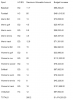
Below are the number of scholarships for each sport offered by UT and the cost of attendance (not counting summer school):
On chart:
HC – Head count sport
EQ – Equivalent sport where partial scholarships can be awarded
I'm sure some of you saw the note where FSU was going to be cutting their budget by ~2% to help pay for COA.
http://www.sportsradiownml.com/common/more.php?m=49&action=blog&r=11
Detailed look at cost of attendance reveals it could lead to controversy
Mar 16, 2015 -- 1:38pm
By Jimmy Hyams
Sports Radio WNML
Cost of attendance is admirable in principal, but in practice, it could lead to controversy regarding recruiting benefits and formula fraud.
It could also lead to sports being eliminated.
“My biggest fear is this will result in dropping sports, maybe not out of the gate but eventually,” said one SEC athletic director who asked not to be identified. “That would be an unintended consequence.”
Another unintended consequence could be a recruiting advantage for those schools that have a much higher cost of attendance than others.
For example, the annual cost of attendance at Penn State is $4788 and at Michigan $2054. At Michigan State, it will be no more than $1.5 million for about 800 student-athletes in 25 sports. Will that be a recruiting advantage for the Nittany Lions over a prospect torn between other Big Ten schools?
Many school officials think yes. And that’s one reason a lot of eyes are watching closely to see what some schools claim for cost of attendance.
Tennessee’s COA – calculated by the Office of Financial Aid for all students using the Independent Student Allowance method – is $5,666 per year (not counting summer school). That’s $4002 in miscellaneous expenses and $1664 in transportation.
That is $80 more than the next SEC institution – Auburn ($5586). But it is almost $3900 more than Georgia ($1,798), which is on the low end of the SEC spectrum. These numbers are either last year’s figures or projected for the upcoming fiscal year according to information from various websites.
In the SEC, only three schools are over $5000, three schools are in the $4000s, six are in the $3000s and two are below $3000 – Georgia and Vanderbilt ($2,730).
Based on Tennessee’s 260 scholarships at $5,666, the annual cost of attendance to UT’s athletic department will be $1.474 million. Full scholarship student-athletes will get $5,666. An athlete on 50% scholarship will get 50% of the COA. A student on 25% scholarship will get 25% of the COA, etc.
Walk-ons do not get COA.
For travel, UT’s formula is based on allowing three trips per year to Memphis, which is about 388 miles from Knoxville. But if a student-athlete is from California, he/she can appeal for an adjustment.
In the recent past, Florida State and Texas A&M used the student assistance fund to pay policy premiums for career-ending injuries to NFL caliber football players. Tennessee has not done that, a source said.
Could schools start using cost of attendance to pay for such policy premiums? That seems unlikely, since COA applies to all students, not just student-athletes.
One concern is that the COA is being calculated differently from school to school, even though guidelines have been set by the Higher Education Act.
“This cost of attendance calculation is to be completed by applying the same standards, policies, and procedures for athletes as for all other students,” said Greg Sankey, SEC executive associate commissioner.
Sankey noted the NCAA rule is designed to “provide benefits to student-athletes equal to but not greater than their cost of education. The SEC is in the process of evaluating whether any refinements to the rule would be appropriate or desirable.”
But what about the huge difference between UT and Georgia? Will the SEC intervene or review the school’s formulas?
“We do not currently have in place any process for conference-level review of the manner in which schools calculate cost of attendance for purposes of athletic scholarship,” Sankey said.
One reason COA numbers could vary is a difference from school to school in in-state and out-of-state tuition. Some factor in credit hours. UT does not factor credit hours taken, only that the student must be full time (minimum 12 hours.)
Another concern is that the COA at some schools might be considerably higher now than it was before the NCAA permitted COA stipends to student-athletes.
Not all schools have to pay COA stipends, but the pressure to do so will be immense.
“The NCAA says it’s permissive legislation, meaning you don’t have to do it,” said one SEC school official. “Trust me, if you are one of the Power Five Conference teams, you have to do it. But some other conferences might not be able to afford it.”
All SEC schools can financially handle COA. Some – like Tennessee – might use revenues from the recently launched SEC Network to pay for COA.
Over and above cost of attendance, student-athletes may still receive the Pell Grant (up to $5,775 annually) and the needy student fund (for example, travel home for a death in the family).
Some in the NCAA proposed eliminating the Pell Grant and needy student fund if COA was adopted.
“Are you kidding me?” one SEC school official said. “People were actually debating that. You can’t give (COA) and then take away (something else). What are we accomplishing (if we do that)?”
A couple of years ago, a proposal to pay a $2,000 stipend for COA was voted down by the NCAA membership. That in part led to the formation of the Power Five Conference.
But, as Sankey said, each SEC school is responsible for its own number.
Mike Ward, associate athletic director at UT, said schools have two primary concerns related to cost of attendance.
“One, the tail will start wagging the dog and athletics will start dictating/interfering with cost of attendance, and, two, that schools will exploit cost of attendance adjustments (e.g. if we have a student-athlete from Alaska, we could permissible request an increase in COA because of the incredibly high cost of travel to and from),” Ward said.
“Point One isn’t an issue here (UT) as we have nothing to do with the COA determination nor do we want to. Point Two, we’ll just have to wait and see.”
One question remains unanswered: Will student-athletes be taxed on cost of attendance stipends? Ward said for now, the answer appears to be no. But he said that has yet to be determined.
Below are the SEC cost of attendance numbers for each school. The amount is what has been projected for next year or the cost for last year, based on website information. SEC schools likely will submit their final number at the SEC spring meetings in May in Sandestin, Fla.
Alabama $3298
Arkansas $4002
Auburn $5586
Florida $3320
Georgia $1798
Kentucky $3526
LSU $3680
Ole Miss $4500
Mississippi State $5126
Missouri $3664
South Carolina $4151
Tennessee $5666
Texas A&M $3100
Vanderbilt $2730
Here are the high and low numbers by conference:
ACC: Florida State ($5,356) to Syracuse ($1,596)
Big Ten: Wisconsin ($4,888) to Michigan State ($1,500)
Big 12: Texas Tech ($5,100) to West Virginia ($1,971)
Pac-12: Utah ($5,094) to USC ($1,580)
SEC: Tennessee ($5,666) to Georgia ($1,798)
Below are the number of scholarships for each sport offered by UT and the cost of attendance (not counting summer school):
On chart:
HC – Head count sport
EQ – Equivalent sport where partial scholarships can be awarded
Last edited:


